
Juicing & Smoothies
Juicing for Beginners: How to Start, What to Juice and Easy Recipes to Try
New to juicing? Here's how I would start, including what fruits and vegetables to use, how to make vegetable juice taste good and three easy recipes to try.
By Lena Sokolov
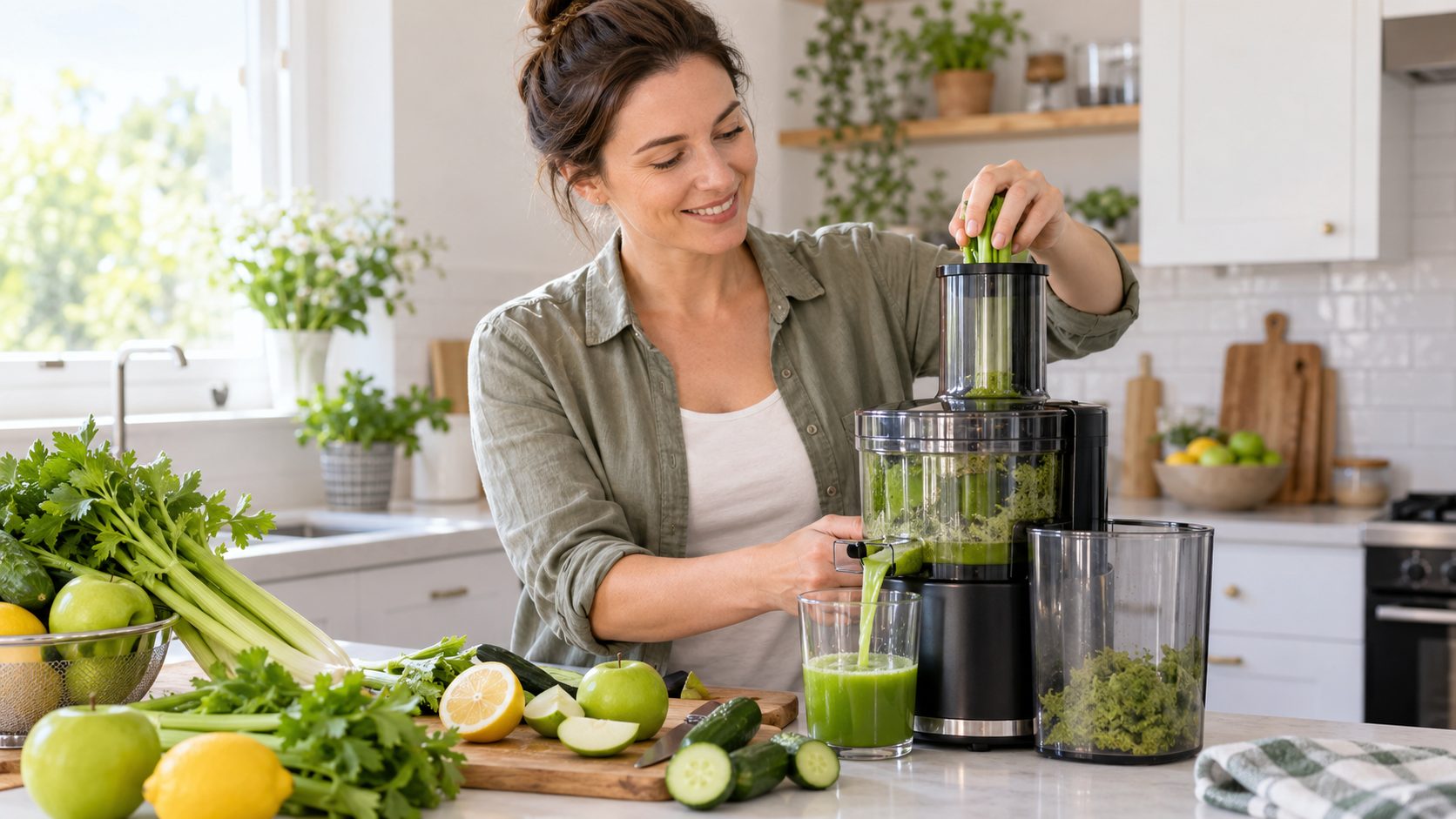
I have been juicing for years, and one thing I can tell you is that juicing does not have to be complicated.
When you first start looking into it, though, it can certainly feel that way.
Which juicer should you buy? Do you peel everything? Which vegetables actually taste good together? How much fruit should you use? Is green juice supposed to taste like grass? And then there are all the claims about detoxing, cleansing and losing weight.
I think it's much easier to start with something simpler:
Learn how to make fresh juice that you actually enjoy drinking.
You don't need twelve ingredients. You don't need an elaborate cleanse. And you definitely don't need to force yourself to drink something you hate because someone told you it's healthy.
If you're completely new to juicing, here's how I would start.
What Is Juicing?
Juicing means extracting the liquid from fruits and vegetables while separating out much of the solid pulp.
If you put an apple, cucumber and celery through a juicer, for example, you'll end up with juice on one side and pulp on the other.
That's different from making a smoothie.
With a smoothie, the entire fruit or vegetable is blended into the drink, so you retain the fiber that is removed with the pulp during juicing.
I enjoy both, but I don't think of them as the same thing.
And I definitely don't think fresh juice should replace eating whole fruits and vegetables.
For me, juicing is simply another way to include and enjoy produce in my everyday life.
Is Juicing Actually Healthy?
Fruits and vegetables provide vitamins, minerals and other beneficial plant compounds, and fresh juice can provide many of those nutrients.
But juicing also removes much of the fiber found in whole produce.
That's an important distinction.
I don't like the idea of telling women that drinking a glass of juice is somehow better than eating vegetables.
You still need a balanced diet.
I think fresh juice makes much more sense as something you add to a healthy lifestyle, rather than something that replaces food.
That's how I prefer to look at it.
Do You Need a Juicer?
If you plan to juice regularly, I think having an actual juicer makes the process much easier.
A juicer separates the liquid from the pulp for you.
There are several different types of juicers, and you can spend anywhere from relatively little to hundreds of dollars.
But if you're a beginner, don't assume you need the most expensive machine.
The best juicer is the one you'll actually use.
If it takes twenty minutes to assemble and another thirty minutes to clean, there's a good chance it will eventually become a very expensive kitchen decoration.
When you're choosing one, I would pay attention to:
How easy it is to use
How easy it is to clean
How much counter space it takes
What kinds of produce it handles well
How much juice you realistically plan to make
You can also experiment with making juice in a high powered blender and then straining out the pulp, although the process and result are different from using a juicer.
If you're not sure whether juicing is something you'll stick with, that can be a way to experiment before investing in another appliance.
What Fruits and Vegetables Are Good for Juicing?
This is where beginners often make juicing harder than it needs to be.
You don't have to start with unusual ingredients.
Some very common produce works beautifully in fresh juice.
Apples
Apples are one of the easiest ways to make a vegetable juice more pleasant when you're first getting used to the flavor.
They're naturally sweet and pair well with many vegetables.
Carrots
Carrots are another beginner friendly option.
They're naturally sweeter than many green vegetables and work well in simple juices.
Cucumbers
Cucumbers contain a lot of water and have a mild flavor.
They're especially useful when you want a fresh, lighter tasting juice.
Celery
Celery produces quite a bit of liquid and works well as a base for green juice.
Its flavor is stronger than cucumber, so if you're new to it, combine it with produce you already enjoy.
Leafy Greens
Spinach, kale and other leafy greens can be added to juice, but I wouldn't necessarily make your very first juice an enormous glass of concentrated greens.
Start with a smaller amount.
Let your taste adjust.
Healthy food doesn't have to taste terrible to count.
Citrus
Lemon, lime, orange and grapefruit can add brightness and help balance some of the stronger vegetable flavors.
Just remember that citrus peel can be very bitter, so preparation matters depending on the fruit and your juicer.
Ginger
A little ginger can completely change a juice.
And I mean a little.
If you've never juiced ginger before, don't put an enormous piece through your juicer and learn this lesson the hard way.
Start small.
You can always add more next time.
Do You Have to Peel Fruits and Vegetables Before Juicing?
Not always.
For many fruits and vegetables with edible skins, you can wash them thoroughly and juice them with the skin on if your juicer can handle them.
But there are exceptions.
Thick or bitter peels, such as orange and grapefruit peel, are usually better removed.
You also need to remove things your juicer shouldn't process, such as large pits or hard stones.
And always follow the instructions for your particular machine.
When I'm preparing produce, my main priorities are simple:
Wash it well.
Remove anything that shouldn't go through the juicer.
Cut it into pieces my machine can comfortably handle.
You don't need to make food preparation more complicated than necessary.
How Do You Make Vegetable Juice Taste Good?
This may be the most important question in the entire beginner article.
Because if your juice tastes awful, you're probably not going to keep juicing.
One of the easiest approaches is to start with a mild vegetable base and add a little sweetness and acidity.
For example:
Cucumber + celery + apple + lemon
You have the mild freshness of cucumber, the vegetable flavor of celery, sweetness from apple and brightness from lemon.
As you get used to drinking vegetable juice, you can adjust the balance.
Maybe you use less apple.
Maybe you add more greens.
Maybe you discover that you love ginger.
Your juice doesn't have to look exactly like someone else's.
Should You Use Mostly Fruit or Mostly Vegetables?
When you're first starting, fruit makes juice much easier to enjoy because of its sweetness.
But it's also easy to turn a glass of juice into mostly fruit juice.
I prefer thinking of fruit as something that can balance the vegetables rather than automatically making fruit the entire base of every juice.
For example, instead of juicing several apples and adding one small piece of celery, try building the juice around vegetables and using an apple to make the combination more enjoyable.
You can gradually adjust according to your taste.
There's no prize for making the greenest, least enjoyable juice in your neighborhood.
The goal is to create something nutritious that you actually want to drink.
3 Easy Juicing Recipes for Beginners
I want to keep these combinations intentionally simple.
You can adjust the quantities depending on the size of your produce, your juicer and how much juice you want.
1. Simple Beginner Green Juice
Cucumber
Celery
Apple
Lemon
This is the type of combination I like for someone who isn't accustomed to green juice yet.
The cucumber keeps it fresh and mild.
The apple adds sweetness.
The lemon brightens everything.
Once you're comfortable with the flavor, you can start experimenting with leafy greens or ginger.
2. Easy Carrot Juice
Carrots
Apple
Orange
Small piece of ginger
Carrots already have some natural sweetness, so they make a very approachable base.
The apple and orange make the juice fruity and fresh, while a small amount of ginger gives it a little kick.
Again, start carefully with ginger.
A tiny piece can go a surprisingly long way.
3. Simple Green Juice With More Greens
Cucumber
Celery
Leafy greens such as spinach or kale
Apple
Lemon
This is an easy next step once you're comfortable with a basic cucumber and celery juice.
Start with a smaller amount of greens and increase it if you enjoy the flavor.
You don't need to prove anything by making your first green juice as intense as possible.
A Simple Formula for Creating Your Own Juice
Once you understand the basic idea, you don't really need a recipe every time.
Think about building your juice from a few categories.
Start with a mild, high water ingredient, such as cucumber.
Add a vegetable, such as celery, carrot or leafy greens.
Add a small amount of fruit for sweetness if you want it.
Then add something for flavor, such as lemon, lime or ginger.
That's it.
Juicing becomes much more fun when you stop believing every glass needs an official recipe.
Experiment.
If you make something you love, write it down.
Because I can almost guarantee that two weeks later you'll remember that amazing juice you made and have absolutely no idea what you put in it.
How Much Juice Should a Beginner Make?
I wouldn't start by making enormous quantities.
Make enough to see whether you actually like the combination.
This is especially useful while you're experimenting.
There's nothing worse than creating a giant container of dark green juice, taking one sip and realizing you don't want the remaining five glasses.
Start smaller.
You can always make more.
Is Fresh Juice Better Right Away?
Fresh juice is best enjoyed relatively soon after making it.
Once fruits and vegetables are cut and juiced, exposure to air, light and temperature can affect quality over time.
If I'm making fresh juice, I prefer the idea of drinking it fresh rather than preparing an entire week's supply and letting it sit.
If you do store juice, refrigerate it promptly in a clean, tightly sealed container and use good food safety practices.
Exactly how long you should keep homemade juice can depend on how it was prepared and stored, so when in doubt, make smaller batches.
Wash Your Produce
This step isn't glamorous enough for social media, but it matters.
Wash fruits and vegetables thoroughly before juicing them.
And keep your juicer clean.
Fresh produce can carry bacteria, and juicing doesn't magically sterilize it.
This is especially important because homemade fresh juice is generally unpasteurized.
Clean produce.
Clean hands.
Clean equipment.
Simple.
Clean Your Juicer Right Away
This is one of the least exciting parts of juicing and one of the most useful habits you can develop.
Don't leave your dirty juicer sitting there.
Pulp that rinses away easily when it's fresh can become much more annoying after it dries onto the screen and other parts of your machine.
When you're finished juicing, deal with the juicer.
Not tonight.
Not after you watch something.
Now.
Your future self will appreciate it.
And if cleaning your juicer becomes such an ordeal that you stop using it, look at whether your machine is actually a good fit for your lifestyle.
Convenience matters.
What Can You Do With the Leftover Pulp?
One of the first things you notice when you start juicing is just how much pulp is left behind.
You don't necessarily have to throw all of it away.
Depending on what's in your juice, pulp can sometimes be used in soups, muffins, breads, vegetable patties, sauces or other recipes.
You can also compost it.
But I don't think you need to feel guilty if you don't turn every spoonful of carrot pulp into another recipe.
If finding uses for the pulp makes juicing more enjoyable for you, wonderful.
If it turns juicing into another job, keep things realistic.
Is Juicing the Same as Making a Smoothie?
No.
This is one of the most common beginner questions.
A juicer extracts liquid and leaves much of the fiber behind in the pulp.
A blender keeps the whole fruit or vegetable in the drink, so smoothies generally retain the fiber.
That doesn't automatically make one "good" and the other "bad."
They're simply different.
I enjoy juicing for different reasons than I enjoy smoothies.
I'm going to cover this much more thoroughly in a separate article because I think juicing versus smoothies deserves its own discussion.
Can Fresh Juice Replace Fruits and Vegetables?
I wouldn't use it that way.
Whole fruits and vegetables give you fiber along with their other nutrients.
Fresh juice can be an enjoyable addition to your diet, but I wouldn't use it as an excuse to stop eating produce.
I think this is where wellness sometimes becomes unnecessarily extreme.
Something can be good without needing to replace everything else.
You can drink fresh vegetable juice and eat vegetables.
You can make smoothies.
You can eat salads.
You can roast vegetables with dinner.
It doesn't have to be one or the other.
What About Juice Cleanses and Detoxing?
This is a subject I want to talk about separately because I have personal experience with juice fasting.
But I want to make an important distinction right here.
You'll often hear that juicing "detoxes" the body or removes toxins.
I would be careful with claims like that.
Your body already has organs, including your liver and kidneys, that continuously process and eliminate substances your body doesn't need.
There isn't good evidence that a juice cleanse somehow takes over that job and washes unspecified toxins out of your body.
That doesn't mean someone can't have a personal experience with juice fasting that she finds interesting or meaningful.
I certainly have experiences I want to share.
But there's a difference between saying:
"This is what I experienced."
and saying:
"This has been scientifically proven to detox your body."
On this website, I want to keep those two things separate.
Juicing Doesn't Have to Be About Weight Loss
Another thing you'll see constantly online is juicing for weight loss.
Fresh juice can certainly be part of someone's overall diet, but I don't think beginners should start juicing with the idea that every glass needs to become a weight loss strategy.
And I especially don't recommend assuming that replacing normal meals with juice is automatically healthy simply because the juice contains vegetables.
My reason for juicing is much broader.
It's one of the ways I enjoy fruits and vegetables and take care of myself.
That is enough.
Common Juicing Mistakes Beginners Make
One of the easiest mistakes is trying to do too much too quickly.
You buy every green vegetable in the produce department.
You make an extremely strong juice.
You hate it.
And then you decide juicing isn't for you.
Start with familiar ingredients.
Another mistake is using so much fruit that you're basically making fruit juice with one decorative spinach leaf.
Fruit can make vegetable juice taste wonderful, but you can gradually learn to rely less on sweetness as your taste changes.
Another common problem is making juicing too complicated.
You don't need nine ingredients every morning.
Some of the nicest juices are incredibly simple.
And finally:
Clean the juicer.
I know I already said it.
I'm saying it again for a reason.
What I Like Most About Juicing
What I like about juicing is how easy it can make experimenting with produce.
You start noticing combinations.
You discover vegetables you enjoy differently in juice than you do on a plate.
You learn that a little lemon can completely change a green juice.
You learn that a tiny piece of ginger may be plenty.
And eventually you stop needing recipes for every glass.
You look in the refrigerator and think:
I have cucumber, celery, an apple and half a lemon.
And that's your juice.
That's when juicing stops feeling like a wellness project and starts becoming part of normal life.
If You're New to Juicing, Start Simple
If I could give a beginner only a few pieces of advice, they would be these:
Don't buy the most expensive juicer just because you're excited today.
Start with produce you already recognize and enjoy.
Use fruit to balance vegetables rather than feeling like every juice has to be extremely sweet.
Don't make huge batches while you're experimenting.
Clean your juicer immediately.
Don't expect juice to replace whole fruits, vegetables or a balanced diet.
And most importantly:
Make something you actually enjoy drinking.
You don't need to suffer your way into being healthy.
Make It Something You Can Actually Continue
This is something I've learned about skincare, exercise, healthy eating and juicing.
The most complicated routine isn't necessarily the best one.
A habit only helps you if it fits into your real life.
If juicing means buying fifteen ingredients, spending an hour preparing everything and another hour cleaning your kitchen, you're probably not going to continue doing it very often.
But cucumber, celery, an apple and a lemon?
That can be manageable.
Start there.
Experiment.
Pay attention to what you like.
And let your routine grow naturally.
You don't need to become an expert before you make your first glass of juice.
You just need to start.
More Healthy Living With Me
Juicing is only one of the ways I try to take care of myself as I get older.
On this website, I'll be sharing more of my personal experience with juicing, smoothies, healthy eating, staying active and simple wellness habits that fit into everyday life.
I'm also going to talk more about my experience with juice fasting, including what I noticed personally and what I would look at differently now.
And next, I'll be answering another question that comes up all the time:
Juicing vs. smoothies: What's the difference, and is one actually better than the other?
If you enjoy practical beauty, skincare and healthy living ideas without making everything complicated, you can also explore the rest of my articles and follow along with me on YouTube.
You Might Also Like
Juicing & Smoothies
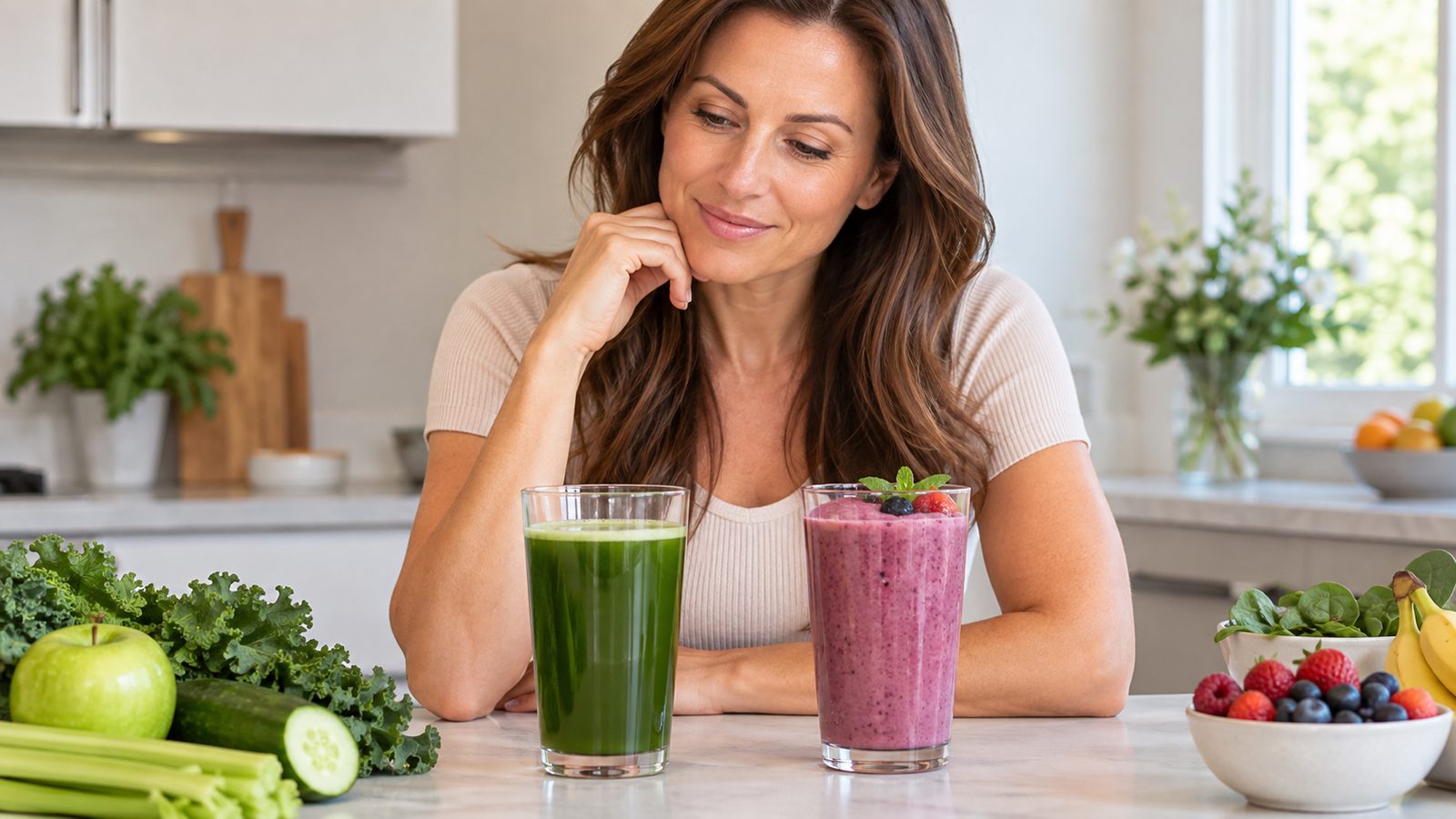
Juicing vs. Smoothies: Which Is Better for You?
Juicing vs. smoothies: what's really the difference? Learn how they compare for fiber, nutrients, fullness, sugar and digestion, and when I choose each one.
Read More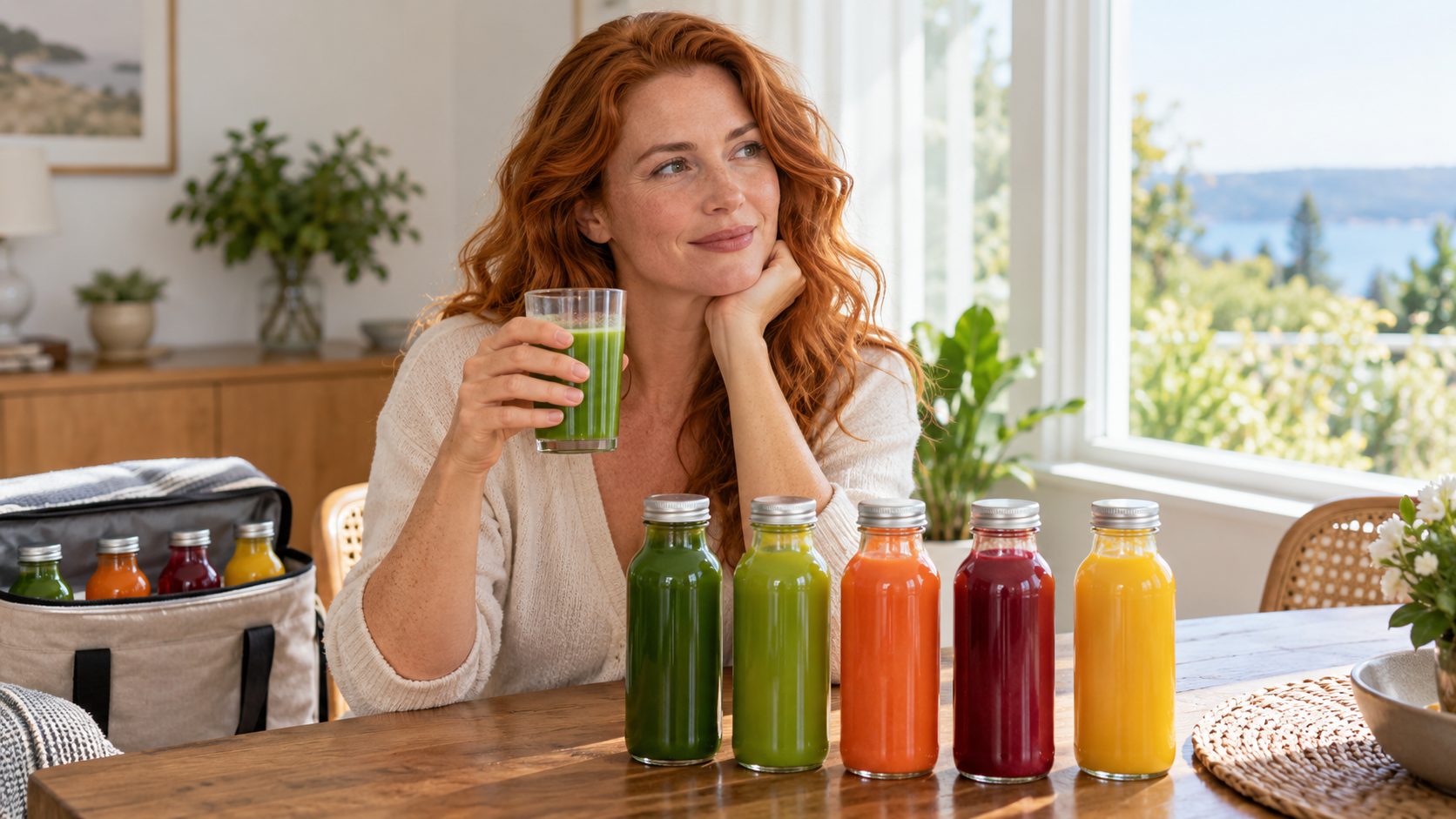
Juicing & Smoothies
I Tried a 21 Day Juice Cleanse: What Happened and What I Learned
I completed a 21 day juice cleanse and documented the experience. Here's what happened to my hunger, cravings, weight and energy, and what I think about juice fasting now.
Read More