
Juicing & Smoothies
Juicing vs. Smoothies: Which Is Better for You?
Juicing vs. smoothies: what's really the difference? Learn how they compare for fiber, nutrients, fullness, sugar and digestion, and when I choose each one.
By Lena Sokolov
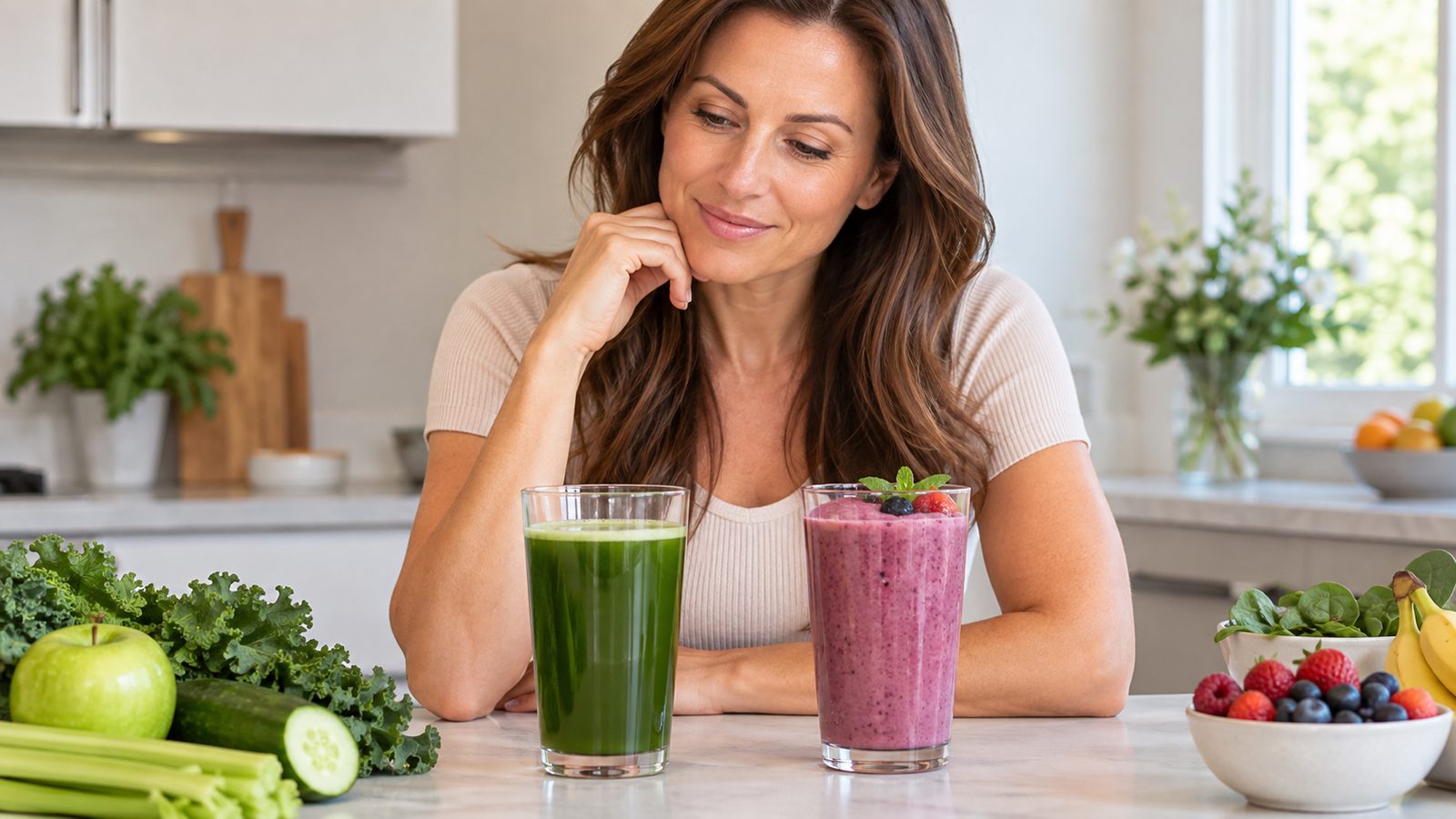
If you've ever wondered whether you should juice your fruits and vegetables or put them into a smoothie, you're definitely not alone.
I love fresh juice, and juicing has been part of my own experience with healthy living for years. I even completed a 21 day juice cleanse, which taught me quite a bit about juicing and about my own body.
But that doesn't mean I think juice is automatically better than a smoothie.
They actually do different things.
The biggest difference comes down to something very simple: fiber.
Once you understand what happens to the fruits and vegetables when you juice them versus blend them, it becomes much easier to decide which one makes sense for you.
What Is the Difference Between Juicing and Blending?
When you put fruits and vegetables through a juicer, the machine extracts the liquid and separates out much of the pulp.
That pulp contains a significant amount of the fiber from the produce.
When you make a smoothie, you're usually putting the whole edible fruit or vegetable into a blender. Nothing is being separated and discarded, so much more of the original fiber stays in your drink.
That's the biggest nutritional difference.
Juicing removes much of the fiber containing pulp. Blending keeps it.
But that doesn't mean one is automatically healthy and the other isn't.
Does Juice Still Have Nutrients?
Yes.
Sometimes I hear juice described as though removing the fiber means you've removed everything beneficial from the fruits and vegetables.
That's not accurate either.
Fresh juice still provides water along with vitamins, minerals and other compounds from the produce you used.
The difference is that you've changed the form in which you're consuming that produce.
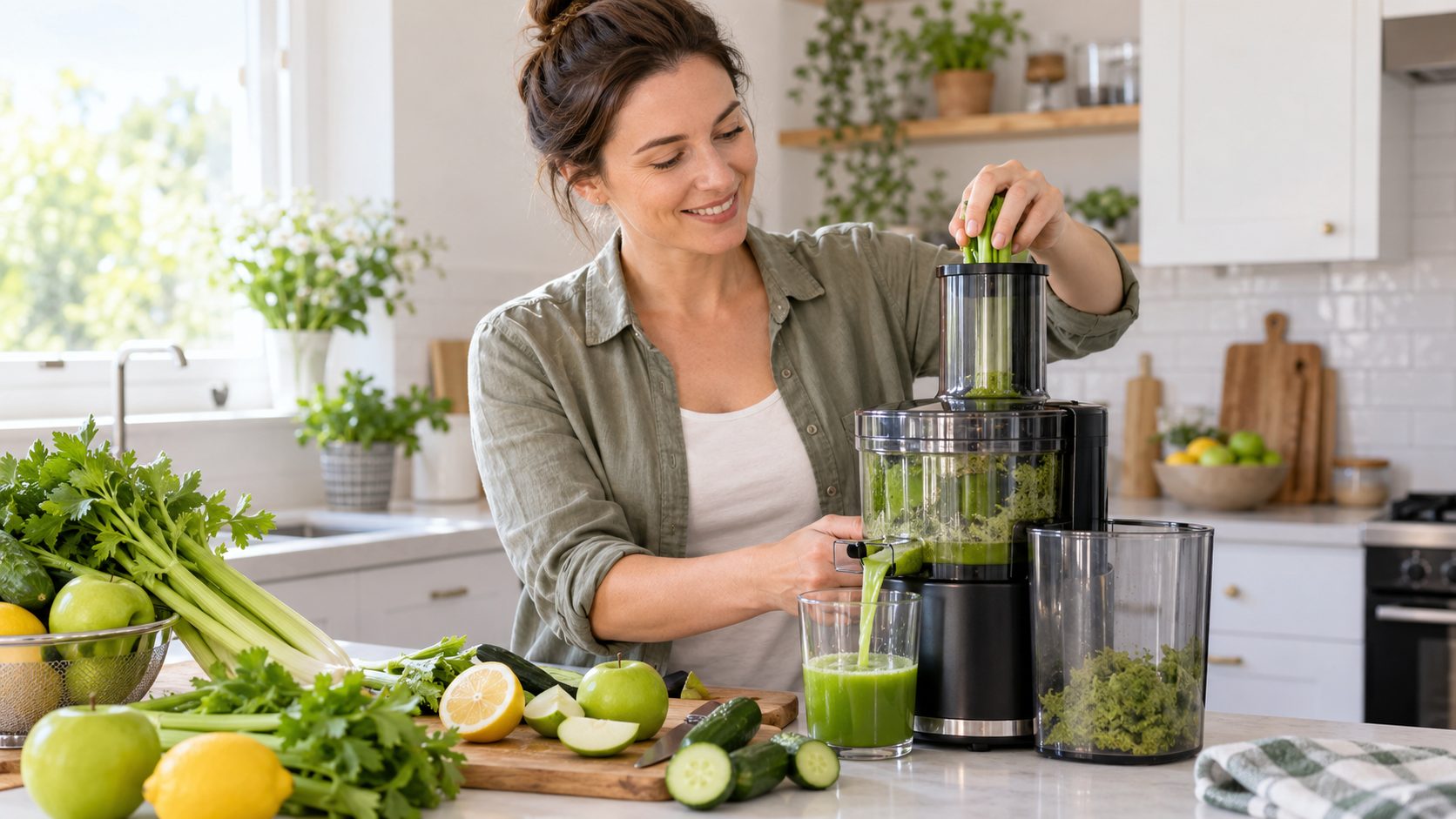
For example, you can put cucumber, celery, apple and lemon through a juicer and end up with a relatively small glass of fresh juice.
If you blended those same ingredients instead, especially without removing anything afterward, you'd have a much thicker and larger drink because all that plant material is still there.
So I don't think we need to turn this into:
Juice is good. Smoothies are bad.
Or:
Smoothies are good. Juice is bad.
They're different.
Smoothies Have a Big Advantage: Fiber
This is where smoothies clearly have an advantage.
Fiber is important for digestive health, and it also helps make food more filling. Because you're keeping the edible fruit and vegetable rather than separating the juice from much of the pulp, smoothies retain considerably more fiber.
This is especially important because most of us don't need to find more ways to remove fiber from our diets.
We generally need to eat more of it.
That's one reason I wouldn't suggest replacing all your fruits and vegetables with juice.
I enjoy juicing, but I still think eating whole fruits and vegetables matters.
Which Keeps You Fuller: Juice or a Smoothie?
Usually, a smoothie.
And fiber isn't the only reason.
A smoothie can include ingredients that you wouldn't normally put through a juicer.
You could make a smoothie with fruit or vegetables and then add yogurt, milk, nuts, seeds, oats or another source of protein or healthy fat.
Suddenly, you have something much more substantial.
Depending on what's in it, a smoothie can sometimes function as a snack or even part of a meal.
I think of fresh juice differently.
For everyday juicing, I would generally think of it as something I'm adding to my normal diet rather than something that has to replace a meal.
That's an important distinction.
What About Sugar in Juice?
This is probably one of the biggest concerns people have about juicing.
Fruit naturally contains sugar.
When you juice several pieces of fruit and remove much of the fiber containing pulp, it becomes very easy to drink the sugar from quite a lot of fruit in a short period of time.
You probably wouldn't sit down and quickly eat several apples, oranges and other fruits at once.
But you could easily drink them in a large glass of juice.
That's why I think what you put into your juice matters.
I prefer the idea of using vegetables as the main part of a juice and adding some fruit for sweetness and flavor rather than making every juice almost entirely from fruit.
One of the simple combinations I shared in my beginner juicing article is:
Cucumber + celery + apple + lemon
The cucumber and celery create the vegetable base. The apple gives it some sweetness, and the lemon brightens the flavor.
You don't need six apples to make vegetable juice taste good.
What About Blood Sugar?
This is another area where the missing fiber matters.
Because juice contains much less fiber than the whole fruits and vegetables it came from, the carbohydrates can generally be consumed and absorbed more quickly.
But I don't like blanket statements such as:
“Juice will spike your blood sugar.”
The actual effect depends on what you put into the juice, how much you drink, what else you consume with it and your individual health.
A large juice made mostly from sweet fruit is very different from a smaller vegetable based juice.
And if you have diabetes, prediabetes or another condition that affects blood sugar, this is an area where individualized advice from your healthcare professional matters much more than a general wellness article.
Is Juice Easier to Digest?
You'll often hear people say that juicing is better because removing the fiber makes all the nutrients easier for your body to absorb.
I wouldn't make that claim.
Removing much of the fiber certainly changes the drink and how it's digested, but fiber isn't simply something standing between your body and the nutrients in your food.
Fiber itself is valuable.
Some people may personally find certain juices easier or more comfortable to consume than a large smoothie, but that's different from saying juice is nutritionally superior because it doesn't contain as much fiber.
Your digestive system is designed to digest food.
We don't need to remove fiber from everything to allow our bodies to get nutrients.
Does a Smoothie Have More Nutrients Than Juice?
This isn't as simple as saying one always has more nutrients than the other.
It depends on the ingredients, the amounts you're using and how they're prepared.
A smoothie keeps more of the whole produce, including its fiber.
Juice concentrates the liquid from a potentially larger quantity of produce into a smaller drink.
So rather than asking:
Which one has more nutrients?
I think a more useful question is:
What am I trying to get from this drink?
If you want something more filling that retains the fiber and can include protein and fat, a smoothie makes a lot of sense.
If you enjoy a fresh vegetable juice and want it as an addition to your normal diet, there's nothing wrong with enjoying juice.
Is Juicing Better Than Blending?
Generally, no.
But I also wouldn't say blending is always “better” than juicing.
If we're specifically asking which method retains more fiber, blending wins.
That's clear.
If we're asking which can more easily become a balanced and filling snack, smoothies also have an advantage because you can add ingredients containing protein and fat.
But those answers don't mean there's no place for fresh juice.
I enjoy juice because I like it.
I like experimenting with combinations of vegetables and fruits. I like making fresh green juice. And it's another way for me to include different produce in my routine.
Not everything we eat or drink has to win a nutritional competition.
Juicing vs. Smoothies for Weight Loss
I wouldn't choose between juice and smoothies based only on which one promises faster weight loss.
You can make a very high calorie smoothie.
You can make a lower calorie smoothie.
You can make a juice with a lot of fruit.
You can make a vegetable based juice.
The ingredients and portions matter.
And neither one magically causes weight loss.
I know firsthand that weight can change dramatically during a very restrictive juice fast because I completed a 21 day juice cleanse myself.
But drinking only juice for weeks is completely different from drinking a glass of fresh juice as part of your normal diet.
For everyday life, I think it's much more useful to ask whether what you're drinking actually fits into an eating pattern you can maintain.
Is a Smoothie a Meal?
It can be, depending on what's in it.
A smoothie made only from fruit and water is very different from one containing fruit, vegetables, yogurt and seeds, for example.
If I wanted a smoothie to be more substantial, I would think beyond simply putting fruit into a blender.
I'd want to consider:
Where is the protein?
Where is the fiber?
Is there some healthy fat?
Will this actually keep me satisfied?
That's what can turn a smoothie from a sweet drink into something much more filling.
Can Juice Replace Vegetables?
I wouldn't use juice as a replacement for eating vegetables.
That's true even though I enjoy juicing.
Whole vegetables provide fiber, require chewing, contribute to fullness and give us something juice simply doesn't.
I think fresh juice works much better as an addition, not as an excuse to stop eating whole fruits and vegetables.
That's also why I don't think you need to choose between juicing, smoothies and whole produce.
You can have all three.
Which One Is Better for Digestion?
If we're talking specifically about getting enough fiber, the smoothie has the advantage.
Because the whole edible fruit or vegetable remains in a smoothie, you're keeping much more of the fiber.
And fiber plays an important role in normal digestive health.
This became especially noticeable to me during my 21 day juice cleanse.
By day 11, I became concerned about how little fiber I was consuming and decided to add a fiber supplement to my morning routine.
Today, that experience is another reminder to me that juice and whole produce aren't nutritionally interchangeable.
Juicing Is Not the Same as a Juice Cleanse
This distinction is very important to me because I've done both.
Juicing can simply mean making yourself a fresh juice and drinking it as part of your normal day.
A juice cleanse or juice fast usually means you're dramatically restricting or eliminating regular food and consuming juice instead.
Those are not the same thing.
You don't have to stop eating for days or weeks to enjoy juicing.
I once completed a full 21 day juice cleanse, and there were things about the experience that I found fascinating. My hunger changed. My cravings changed. I lost weight. I noticed several unexpected things happening with my body.
But there were difficult parts too. By day 21, I was hungry, tired, had a slight headache and needed a nap.
I talk about the entire experience in I Tried a 21 Day Juice Cleanse: What Happened and What I Learned.
Today, I make a much clearer distinction between enjoying fresh juice and recommending prolonged juice fasting.
So, Which Do I Personally Choose?
Both can have a place.
If I want a fresh, lighter vegetable drink, I like juice.
If I want something that keeps the fiber and can be made more substantial and filling, a smoothie makes more sense.
And sometimes I don't want either one.
Sometimes I simply eat the apple.
I think that's something that gets lost in wellness conversations.
We don't always have to turn normal foods into powders, drinks, supplements or complicated routines.
Juice can be wonderful.
Smoothies can be wonderful.
And whole fruits and vegetables are still important.
Juicing vs. Smoothies: My Final Take
If you came here wanting me to declare one winner, I don't think there needs to be one.
The biggest difference to remember is simple:
Juicing removes much of the fiber containing pulp.
Blending keeps much more of the whole fruit or vegetable, including its fiber.
Because of that, smoothies generally have the advantage for fiber and fullness and can more easily be turned into a substantial snack or meal.
Fresh juice can still be an enjoyable way to consume fruits and vegetables, especially when you're using vegetables as the base rather than making every juice almost entirely from fruit.
For me, the question isn't:
Should I be a juice person or a smoothie person?
It's:
What makes sense for me today?
Sometimes that's a smoothie.
Sometimes it's fresh green juice.
And sometimes it's simply eating the fruits and vegetables exactly as they are.
You don't have to choose a team.
New to Juicing?
If you've never made fresh juice before, start with Juicing for Beginners: How to Start, What to Juice and Easy Recipes to Try. I share simple combinations that are approachable for beginners and explain how to make vegetable juice taste good without making the process complicated.
And if you're curious about my more extreme experience with juicing, read I Tried a 21 Day Juice Cleanse: What Happened and What I Learned.
This article is for general educational purposes and shares my personal perspective. It is not medical or individualized nutritional advice. If you have diabetes, kidney disease, digestive concerns or another medical condition that may be affected by significant dietary changes, talk with an appropriate healthcare professional.
You Might Also Like
Juicing & Smoothies
Juicing for Beginners: How to Start, What to Juice and Easy Recipes to Try
New to juicing? Here's how I would start, including what fruits and vegetables to use, how to make vegetable juice taste good and three easy recipes to try.
Read More
Juicing & Smoothies
I Tried a 21 Day Juice Cleanse: What Happened and What I Learned
I completed a 21 day juice cleanse and documented the experience. Here's what happened to my hunger, cravings, weight and energy, and what I think about juice fasting now.
Read More