
Juicing & Smoothies
Healthy Smoothies for Women Over 40: What to Add and Why
Discover what to add to healthy smoothies for women over 40, including protein, fiber, healthy fats, berries, greens and simple nutritious ingredients.
By Lena Sokolov
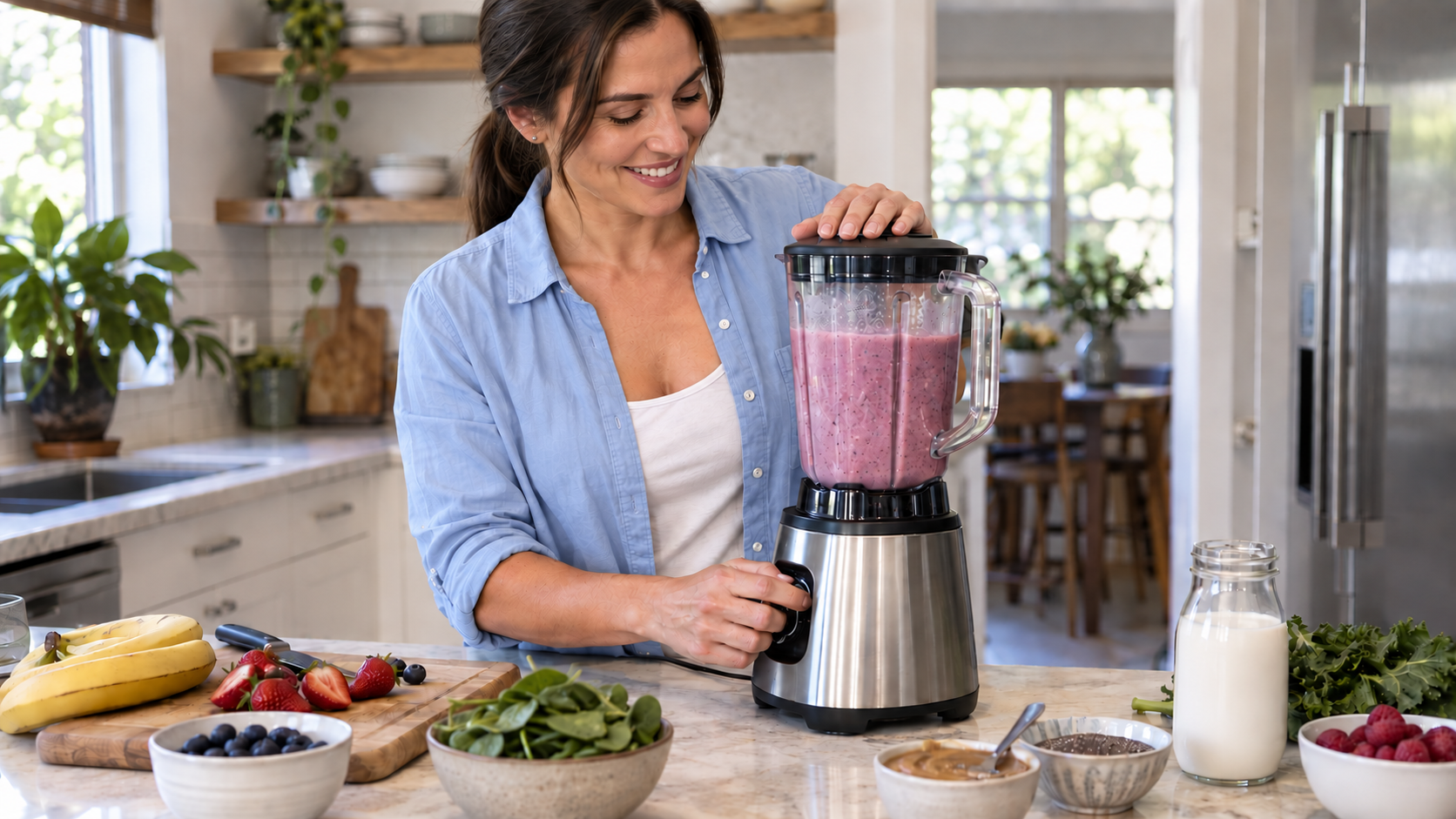
Once you reach your 40s, you may start paying a little more attention to what you eat — not because you need a completely different diet, but because maintaining your energy, strength, and overall health becomes increasingly important.
One of my favorite ways to fit more nutritious foods into the day is a smoothie.
But there is a big difference between a smoothie made mostly from fruit juice and sweetened ingredients and one that contains a thoughtful combination of protein, fiber, healthy fats, fruits, and vegetables.
A good smoothie can be a convenient breakfast, a filling snack, or simply an easy way to add foods to your diet that you might not otherwise eat very often.
Here are some of the ingredients I think are worth considering when making healthy smoothies after 40.
1. Start With Protein
One of the biggest mistakes you can make with a smoothie is filling the blender with fruit, adding liquid, and calling it breakfast.
It may taste wonderful, but it might not keep you satisfied for very long.
Protein becomes especially important as we get older because maintaining muscle mass and strength is an important part of healthy aging.
Depending on what you enjoy and what fits your diet, you can add protein with ingredients such as:
- Greek yogurt
- Cottage cheese
- Kefir
- Milk or unsweetened soy milk
- A protein powder you trust
- Nut or seed butter
If your smoothie is replacing a meal rather than simply accompanying one, including a meaningful source of protein becomes even more important.
2. Don't Be Afraid of Healthy Fats
For years, women were told to avoid fat whenever possible. But foods containing unsaturated fats can absolutely be part of a healthy diet.
A small amount can also make a smoothie richer and more satisfying.
Some of my favorite smoothie additions include:
- Chia seeds
- Ground flaxseed
- Walnuts
- Almond butter
- Peanut butter
- Avocado
You don't need all of them in one smoothie. Even one tablespoon of seeds or nut butter can change the texture and make a simple fruit smoothie much more substantial.
3. Add Fiber Whenever You Can
One of the reasons I like smoothies is that you're blending the whole food rather than extracting only its juice.
When you juice fruits and vegetables, much of their fiber can be removed with the pulp. With a smoothie, that fiber generally stays in the drink.
That's one of the important differences I discuss in my article Juicing vs. Smoothies: Which Is Better for You?
There are plenty of easy ways to add fiber to a smoothie:
- Berries
- Pears
- Apples
- Chia seeds
- Ground flaxseed
- Oats
- Leafy greens
- Avocado
Fiber is important for digestive health and can also help make a smoothie more filling.
4. Berries Are One of My Favorite Choices
Strawberries, blueberries, raspberries, and blackberries are easy smoothie ingredients because they add natural sweetness, beautiful color, and plenty of flavor.
They're also easy to keep in the freezer.
Frozen berries mean you don't have to worry about using fresh fruit before it spoils, and they create a thick, cold smoothie without needing much ice.
Try combining mixed berries with Greek yogurt, chia or flaxseed, and your choice of milk for a simple everyday smoothie.
5. Sneak in Some Greens
If eating a big bowl of spinach doesn't sound exciting every day, putting some into a smoothie may be much easier.
A handful of baby spinach blends surprisingly well with fruit.
Kale can work too, although it has a stronger flavor and tougher texture. If you're new to green smoothies, I would start with spinach and gradually experiment from there.
A combination such as spinach, frozen pineapple, banana, and Greek yogurt can taste completely different from what you might imagine when you hear the words "green smoothie."
You don't need a blender full of greens, either. Start small.
Healthy eating doesn't have to be extreme to be worthwhile.
6. Think About Calcium-Rich Foods Too
Bone health becomes increasingly important for women as we get older, particularly around and after menopause.
A smoothie provides an easy opportunity to include calcium-rich foods.
Depending on your diet, that could mean:
- Milk
- Greek yogurt
- Kefir
- Calcium-fortified plant milk
Check the nutrition label when choosing plant-based milk because calcium and protein content can vary considerably between products.
7. Watch What You Use as the Liquid
The liquid you choose can quietly change the nutritional profile of your smoothie.
Fruit juice isn't automatically "bad," but if you're already putting several servings of fruit into the blender, adding a large amount of juice may give you much more sugar than you intended.
For an everyday smoothie, I usually prefer something simple such as water, milk, kefir, or an unsweetened plant milk.
Let the actual fruit provide most of the sweetness.
8. You Probably Don't Need Added Sugar
A ripe banana, mango, pineapple, peaches, or berries can provide plenty of sweetness on their own.
Before adding honey, maple syrup, agave, or another sweetener, taste your smoothie first.
You may find that you don't need anything else.
This is especially true when you're using very ripe bananas or naturally sweet frozen fruit.
My Simple Smoothie Formula
You really don't need complicated recipes.
I like to think of a healthy smoothie as a simple formula:
Fruit or vegetables + protein + fiber + healthy fat + liquid
Berry smoothie:
Mixed berries + Greek yogurt + ground flaxseed + milk
Green smoothie:
Spinach + pineapple + banana + Greek yogurt + chia seeds + water or milk
Creamy banana smoothie:
Banana + Greek yogurt + peanut or almond butter + ground flaxseed + milk
Peach smoothie:
Frozen peaches + Greek yogurt + chia seeds + milk + a little cinnamon
Once you understand the basic formula, you can create dozens of combinations using whatever you already have in your refrigerator or freezer.
What About Smoothie Powders and "Superfoods"?
This is where I think healthy eating can become unnecessarily complicated.
You don't need ten powders with impressive names to make a nutritious smoothie.
There may be certain supplements or specialty ingredients that make sense for an individual person, but I would rather start with real foods: berries, greens, yogurt, seeds, nuts, oats, avocado, and other simple ingredients.
A smoothie doesn't become healthier just because it contains an expensive powder.
A Good Blender Makes a Difference
You can make a smoothie with many different blenders, but if smoothies become a regular part of your routine, the quality of the blender does make a difference — especially when you're blending fibrous greens, seeds, frozen fruit, nuts, or ice.
I personally like being able to put whole ingredients into the blender and get a smooth texture without having to think too much about it.
And smoothies are only one thing a powerful blender can be useful for. I also like the idea of using one appliance for other healthy foods rather than buying several gadgets that each do only one job.
I'll be sharing more about what I make in my blender beyond smoothies in another article.
Are Smoothies Actually Healthy After 40?
They certainly can be.
But the word "smoothie" doesn't automatically mean healthy.
A smoothie made with fruit juice, several servings of very sweet fruit, flavored yogurt, sweeteners, and other sugary ingredients can end up looking more like dessert.
On the other hand, a smoothie built around whole fruits or vegetables, protein, fiber, and healthy fats can be a convenient way to add nutritious foods to your day.
The goal isn't to create the "perfect" smoothie.
It's to make something you enjoy enough to prepare regularly — while giving your body foods that support your health as you get older.
Healthy Eating After 40 Doesn't Have to Be Complicated
One thing I've come to appreciate is that taking care of yourself doesn't always require dramatic changes.
Sometimes it's simply finding easier ways to make healthier choices consistently.
Keeping frozen berries in the freezer. Adding a handful of spinach to your smoothie. Using Greek yogurt instead of making a drink that's almost entirely fruit. Adding a spoonful of flaxseed or chia seeds.
These are small things.
But small habits repeated over many years are often much more realistic than trying to follow a perfect diet for two weeks.
And that's really what healthy aging is about for me — finding simple things we can actually continue doing as part of everyday life.
This article is for general educational purposes and is not individualized medical or nutrition advice. Nutritional needs can vary, particularly with medical conditions, medications, pregnancy, or specific dietary requirements.
You Might Also Like
Juicing & Smoothies
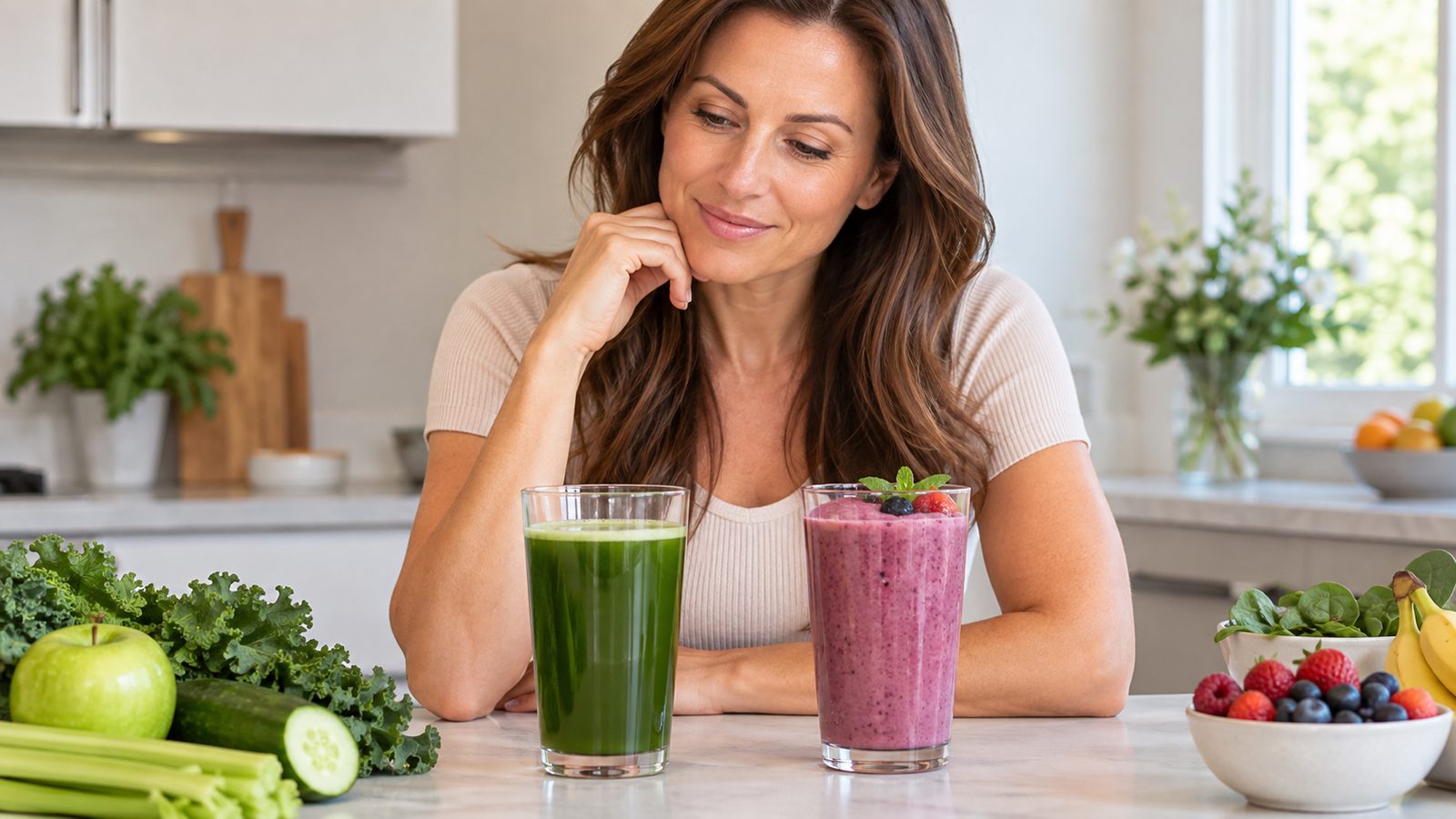
Juicing vs. Smoothies: Which Is Better for You?
Juicing vs. smoothies: what's really the difference? Learn how they compare for fiber, nutrients, fullness, sugar and digestion, and when I choose each one.
Read More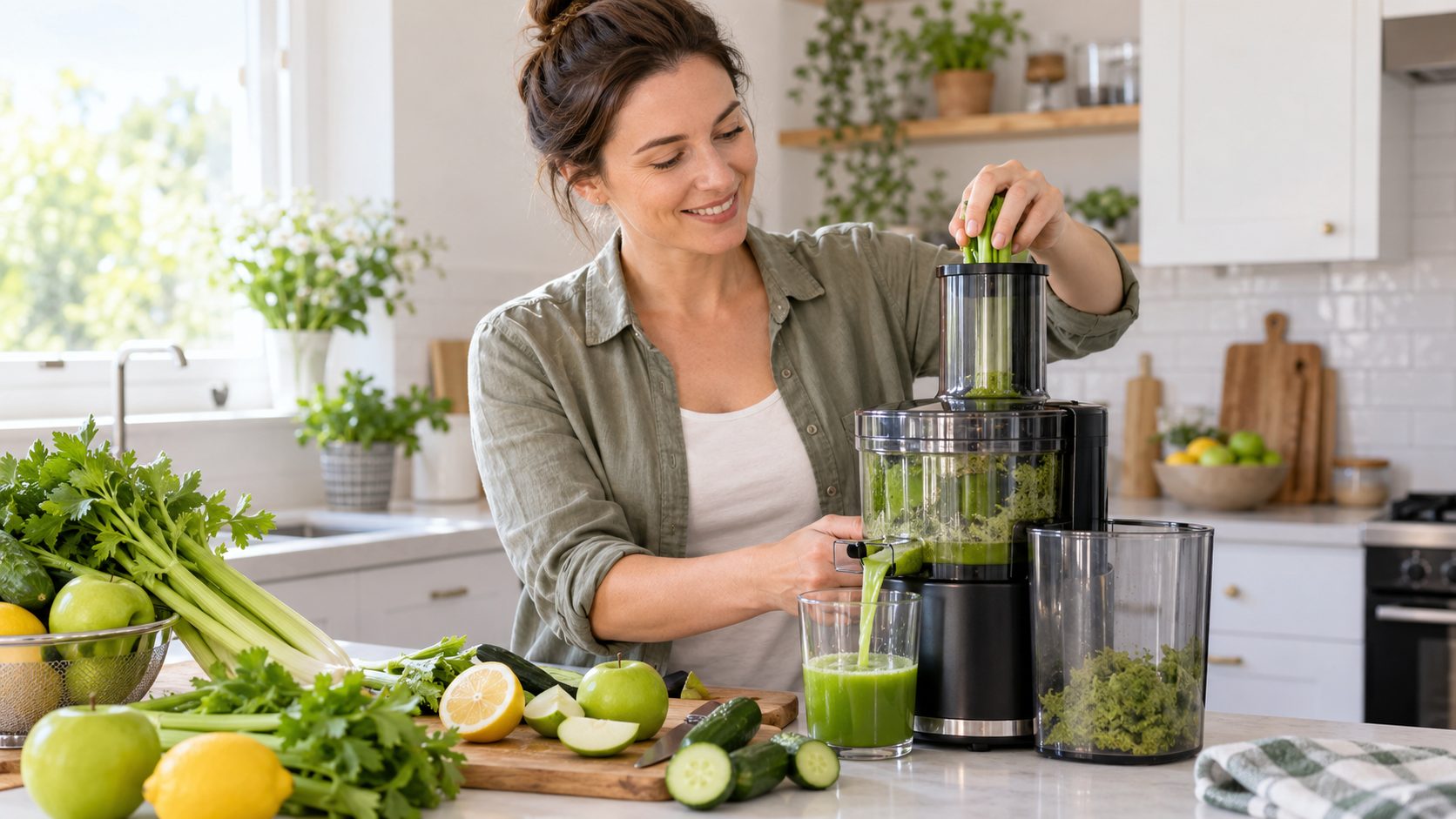
Juicing & Smoothies
Juicing for Beginners: How to Start, What to Juice and Easy Recipes to Try
New to juicing? Here's how I would start, including what fruits and vegetables to use, how to make vegetable juice taste good and three easy recipes to try.
Read More
Wellness
Why Am I So Tired in My 40s? Common Reasons Women Have Less Energy
Feeling more tired in your 40s? I’m sharing what I’ve noticed about my own energy, sleep and perimenopause, plus some common reasons women may feel more tired.
Read More