
Fitness
Strength Training for Women Over 40: How to Start and Get Stronger
New to strength training after 40? Here's how to start simply, choose the right resistance and gradually build strength for everyday life.
By Lena Sokolov
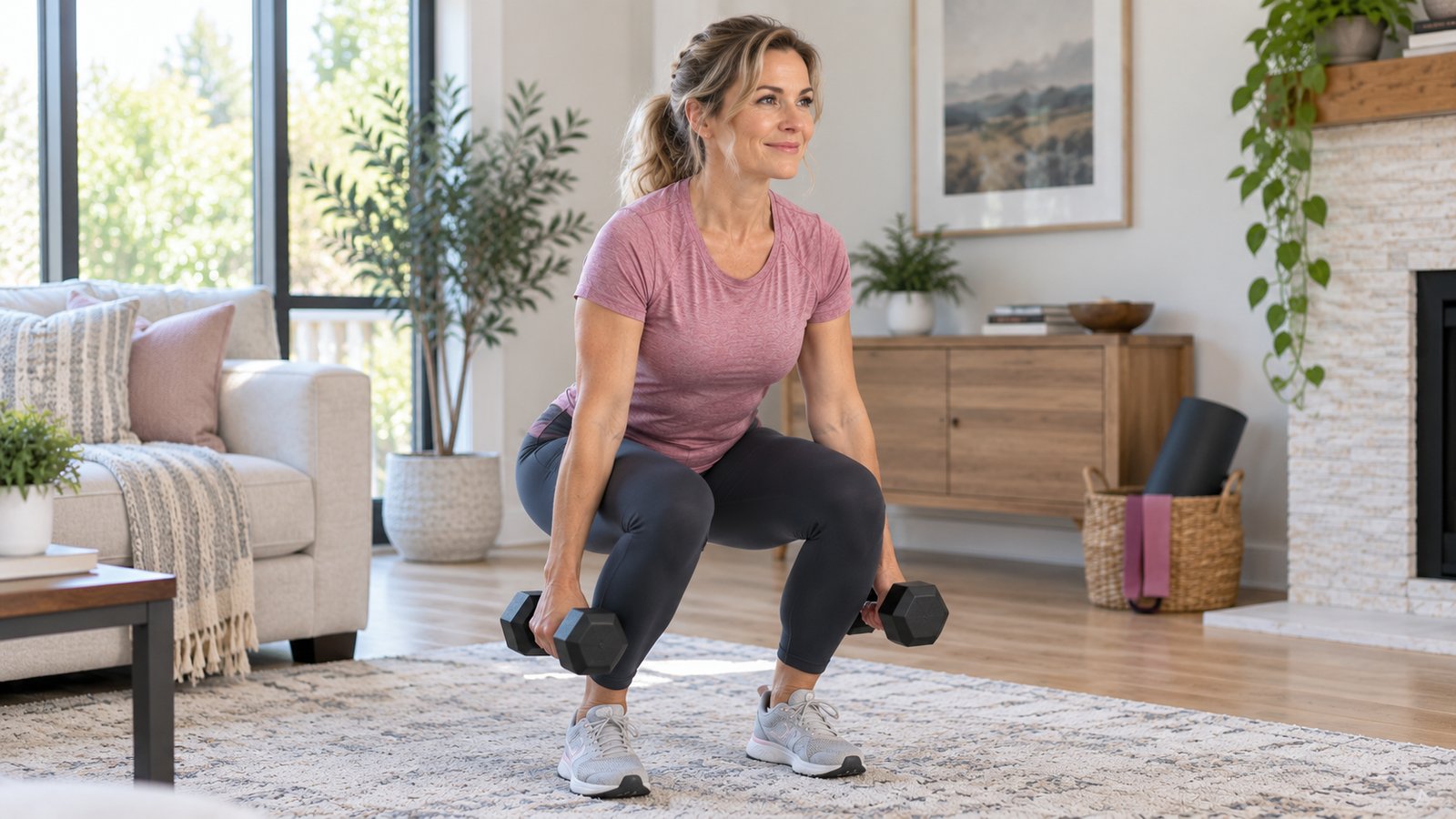
As I've gotten older, I've started thinking about fitness a little differently.
Of course I want to stay active. I enjoy hiking, tennis, ice skating, golf and simply doing things that keep me moving. But staying active and staying strong aren't exactly the same thing.
You can walk every day and still not challenge your muscles very much.
And the older I get, the more I think about what I want my body to be able to do 10, 20 or even 30 years from now.
I want to carry my own groceries. I want to lift a suitcase. I want to climb stairs without thinking about it. I want to hike, travel, play sports and keep up with my family.
That's why strength training deserves its own place in a fitness routine after 40.
And no, that doesn't mean you need to become a bodybuilder or spend five days a week lifting weights at a gym.
It simply means giving your muscles a reason to stay strong and become stronger.
Why Strength Training Matters After 40
We naturally tend to lose muscle as we get older, particularly when we're inactive. That's one reason maintaining and building strength becomes increasingly important with age.
Strength training can help improve muscular strength and physical function, and it can also be part of supporting bone health as we get older.
But I think there's an even simpler way to look at it.
Muscle is useful.
You use strength when you get up from a chair.
When you carry groceries.
When you lift something from the floor.
When you put a suitcase into your car.
When you climb stairs.
When you work in the yard.
When you play with your children or grandchildren.
Strength training isn't only about how your body looks.
It's training your body to continue doing the things you ask it to do.
Can Women Build Muscle After 40?
Yes.
Turning 40 doesn't suddenly take away your ability to become stronger.
A large 2026 systematic review and meta analysis looking at resistance training in women found improvements in muscular strength in both premenopausal and postmenopausal women. The researchers did not find a significant difference between the groups in their strength response to training.
That doesn't mean age and hormonal changes don't matter.
Our bodies change. Recovery can change. Sleep, health conditions, previous injuries, nutrition and activity level can all affect how we feel and how we train.
But I don't like the message that once a woman reaches 40, her body is somehow working against her.
You can still get stronger.
You just have to give your muscles something to adapt to.
Do You Need a Gym?
No.
A gym can certainly make strength training easier because you have access to weights and machines, but it's not the only way to get stronger.
You can use:
Dumbbells
Resistance bands
Weight machines
Kettlebells
Your own body weight
Or a combination of them.
If you're a beginner, you don't need to buy an entire home gym before you start.
A couple of dumbbells or resistance bands can give you plenty to work with in the beginning.
The important part isn't where you exercise.
It's whether your muscles are being challenged.
Weights vs. Resistance Bands vs. Bodyweight
I don't think beginners need to worry too much about choosing the “perfect” type of strength training.
They all have advantages.
Bodyweight exercises
These are convenient because you don't need equipment.
Think about movements such as squats to a chair, wall push ups or other exercises where your body provides the resistance.
They're often a comfortable place to start.
Resistance bands
Bands are inexpensive, portable and easy to keep at home.
They can be useful for pulling movements and for gradually adding resistance to exercises.
Weights
Dumbbells and other weights make it relatively easy to measure your progress.
If a certain weight becomes easy, you can eventually move to a slightly heavier one.
You don't have to choose just one method.
Use whatever makes strength training practical enough that you'll actually do it.
How Often Should Women Over 40 Strength Train?
For most beginners, two strength training days per week is a very reasonable place to start.
Current U.S. physical activity guidelines recommend that adults do muscle strengthening activities involving the major muscle groups on at least two days each week.
That doesn't mean you need to start with an elaborate schedule.
If you're currently doing no strength training at all, even beginning with one manageable workout and gradually building toward two is progress.
I would much rather see someone consistently strength train twice a week than plan five workouts every week, become overwhelmed and stop.
Consistency wins.
What Exercises Should a Beginner Do?
This is where strength training can start looking unnecessarily complicated.
You search for a workout online and suddenly someone is giving you 18 exercises with names you've never heard before.
I think it's easier to think about movements.
Your body needs to be able to do things such as:
Squat
Hinge
Push
Pull
Carry
And stabilize your body while doing them.
These aren't just gym movements.
They're everyday movements.
Squatting
Think about sitting down in a chair and standing back up.
That's essentially a squat.
Hinging
Think about bending at your hips to pick something up from the floor.
Learning to hinge properly helps you use your hips and legs instead of relying entirely on your back.
Pushing
Opening a heavy door is a pushing movement.
Exercises might include wall push ups, incline push ups or a chest press.
Pulling
Pulling something toward you uses another group of muscles.
Rows with a resistance band or dumbbells are examples.
Carrying
This one is especially easy to understand.
We carry groceries, laundry baskets, bags and luggage all the time.
Strength training can make those everyday tasks easier.
A Simple Beginner Strength Routine
If you've never strength trained before, you don't need a complicated program.
A basic full body workout could include something like:
Chair squat or bodyweight squat
Hip hinge or Romanian deadlift with light weights
Wall or incline push up
Resistance band or dumbbell row
Overhead press with manageable weights
A simple carry
You could start with one or two sets of each exercise and focus first on learning how to perform the movements comfortably and with control.
As you become stronger and more confident, you can gradually increase the challenge.
The exact exercise that's appropriate for you depends on your current fitness, mobility, injuries and experience, so don't feel that everyone needs to begin at exactly the same level.
How Heavy Should Women Over 40 Lift?
There's no single correct dumbbell weight.
That's one of the things that can make beginner fitness advice confusing.
Someone might tell you to start with five pound dumbbells.
But five pounds could be too difficult for one exercise and far too easy for another.
And what's challenging for you may be easy for someone else.
Instead of focusing on a specific number, choose resistance that allows you to perform the exercise with good control while still making the final repetitions feel challenging.
If you could easily continue doing another 20 repetitions, the exercise probably isn't challenging your muscles very much.
On the other hand, if you're losing control of the movement or can't perform it properly, the resistance may be too heavy.
The goal isn't to prove anything.
The goal is to challenge your muscles appropriately.
You Have to Give Your Muscles a Reason to Get Stronger
There's a fitness term called progressive overload.
It sounds much more complicated than it actually is.
It simply means that as your body adapts, you gradually increase the challenge.
Let's say you start doing an exercise with a certain weight.
At first, it's difficult.
A few weeks later, that same exercise feels easy.
That's good. It means you've adapted.
But if you continue doing the exact same easy exercise forever, your body has less reason to keep getting stronger.
So eventually you might:
use a little more weight,
do another repetition,
add another set,
improve your range of motion,
or move to a slightly more challenging version of the exercise.
You don't need dramatic increases.
Small progress is still progress.
Will Lifting Weights Make Women Bulky?
This concern still comes up a lot.
Strength training does not automatically turn a woman into a bodybuilder.
Developing a bodybuilding physique requires a significant amount of deliberate training, time, nutrition and individual biological factors.
You can absolutely train to become stronger without having bodybuilding as your goal.
Personally, I think the more useful question is:
What do I want my body to be able to do?
I want strength that helps me live my life.
What About Menopause and Strength Training?
It's impossible to talk about fitness for women over 40 without eventually talking about perimenopause and menopause.
Hormonal changes can affect things such as sleep, body composition and how a woman feels.
But I don't want to make every conversation about women over 40 entirely about menopause.
Not every woman over 40 is menopausal.
And resistance training is useful whether you're premenopausal, perimenopausal or postmenopausal.
The encouraging part is that women can continue improving their strength throughout these stages of life.
Your program may need to be adjusted for you, but you don't need to assume your opportunity to become stronger has passed.
What About Bone Health?
This is another reason strength training often becomes part of conversations about women and aging.
Resistance exercise places demands on your muscles and skeleton and is commonly included as part of an overall strategy for maintaining musculoskeletal health.
But I don't want to promise that lifting weights will prevent osteoporosis.
Bone health is affected by many things, including age, hormones, genetics, nutrition, medications and activity.
Think of strength training as one part of taking care of your body, not a guarantee against any particular condition.
Strength Training or Cardio: Which Is More Important After 40?
I don't think we need to choose.
They do different things.
Aerobic exercise helps train your cardiovascular system.
Strength training challenges your muscles.
That's why current physical activity recommendations include both aerobic activity and muscle strengthening, rather than telling adults to pick one.
This fits very naturally with how I like to stay active.
Hiking, walking, tennis, skating and other activities keep me moving.
Strength training serves a different purpose.
I want both endurance and strength.
Don't Forget About Recovery
More isn't automatically better.
Your muscles need time to recover from challenging exercise.
That's especially important when you're beginning.
You don't need to train the same muscles intensely every single day.
Sleep, nutrition and recovery are part of fitness too.
And learn the difference between an exercise feeling challenging and something actually hurting.
Muscle fatigue during an exercise is one thing.
Sharp or significant pain is another.
You don't get extra points for ignoring your body.
Common Strength Training Mistakes After 40
One of the biggest mistakes is trying to do too much too quickly.
You haven't exercised in years, and suddenly you're doing an intense five day program because you're motivated.
Give your body time to adapt.
Another mistake is never increasing the challenge.
If you've been using the same tiny weights for years and they no longer feel difficult, your muscles may need more resistance.
And another common mistake is focusing only on the areas we can see in the mirror.
A useful strength routine should train the whole body, not just arms or abs.
Finally, don't compare your beginning with someone else's tenth year.
How Do You Know You're Getting Stronger?
The scale isn't going to tell you.
Look at what your body can do.
Maybe the dumbbells you started with now feel light.
Maybe you can do more repetitions.
Maybe you can squat lower with better control.
Maybe carrying groceries feels easier.
Maybe you can hike longer.
Maybe stairs don't tire you as much.
Maybe something you once needed help lifting is now easy.
Those are real results.
And they're exactly the kind of results I care about as I get older.
You Don't Need to Be the Strongest Woman in the Gym
There's something I really like about strength training when you stop thinking of it as a competition.
Your goal isn't to lift what somebody else lifts.
You're not competing with the woman beside you.
You're building your body from wherever it is today.
If you start with a wall push up and six months later you're doing push ups from a lower surface, that's progress.
If you begin squatting to a chair and eventually you're confidently squatting with dumbbells, that's progress.
If you start with one strength workout each week and eventually two workouts simply become part of your routine, that's progress too.
My Approach to Getting Stronger After 40
I don't want fitness to take over my entire life.
I want fitness to help me live my life.
That's an important distinction.
I want to hike.
I want to play tennis.
I want to ice skate.
I want to play golf with my kids.
I want to travel and carry my own suitcase.
I want to be able to pick things up, climb stairs and move through normal life without constantly thinking about what my body can't do.
That's what strength means to me.
And that's why I think women should start thinking about strength long before they feel like they're “old.”
If You're Starting Strength Training After 40, Start Simple
You don't need to completely change your life this week.
Start with a couple of basic full body workouts.
Learn the movements.
Use resistance you can control.
Gradually challenge yourself more as you get stronger.
Keep walking and doing the activities you enjoy.
Give yourself time to recover.
And most importantly, keep going.
Because the goal isn't to lift the heaviest weight in the gym.
The goal is to build a body that stays useful.
I want to be able to carry things, climb stairs, hike, travel, play sports and keep doing the things I enjoy as I get older.
That's what being strong means to me.
Keep Reading
If you're trying to build a more active lifestyle rather than only starting a strength program, read How to Stay Fit After 40: Simple Ways to Stay Strong and Active next. It covers walking, cardio, strength, mobility, balance and why I think the best kind of fitness is often movement you genuinely enjoy.
This article is for general educational purposes and isn't individualized medical or fitness advice. If you have an injury, osteoporosis, a medical condition, significant pain or have been inactive for a long time, talk with an appropriate healthcare professional before beginning a new exercise program.
You Might Also Like
Fitness
How to Stay Fit After 40: Simple Ways to Stay Strong and Active
Staying fit after 40 doesn't have to mean living at the gym. Here are simple ways to stay strong, active and mobile while doing more of the things you enjoy.
Read More
Juicing & Smoothies
Juicing vs. Smoothies: Which Is Better for You?
Juicing vs. smoothies: what's really the difference? Learn how they compare for fiber, nutrients, fullness, sugar and digestion, and when I choose each one.
Read More
Juicing & Smoothies
Juicing for Beginners: How to Start, What to Juice and Easy Recipes to Try
New to juicing? Here's how I would start, including what fruits and vegetables to use, how to make vegetable juice taste good and three easy recipes to try.
Read More