
Wellness
Why Do I Wake Up Hot at Night? Causes and Simple Ways to Sleep Cooler
Waking up hot at night? Learn common reasons you may get hot while sleeping, the difference between overheating and night sweats, and simple ways to sleep cooler.
By Lena Sokolov
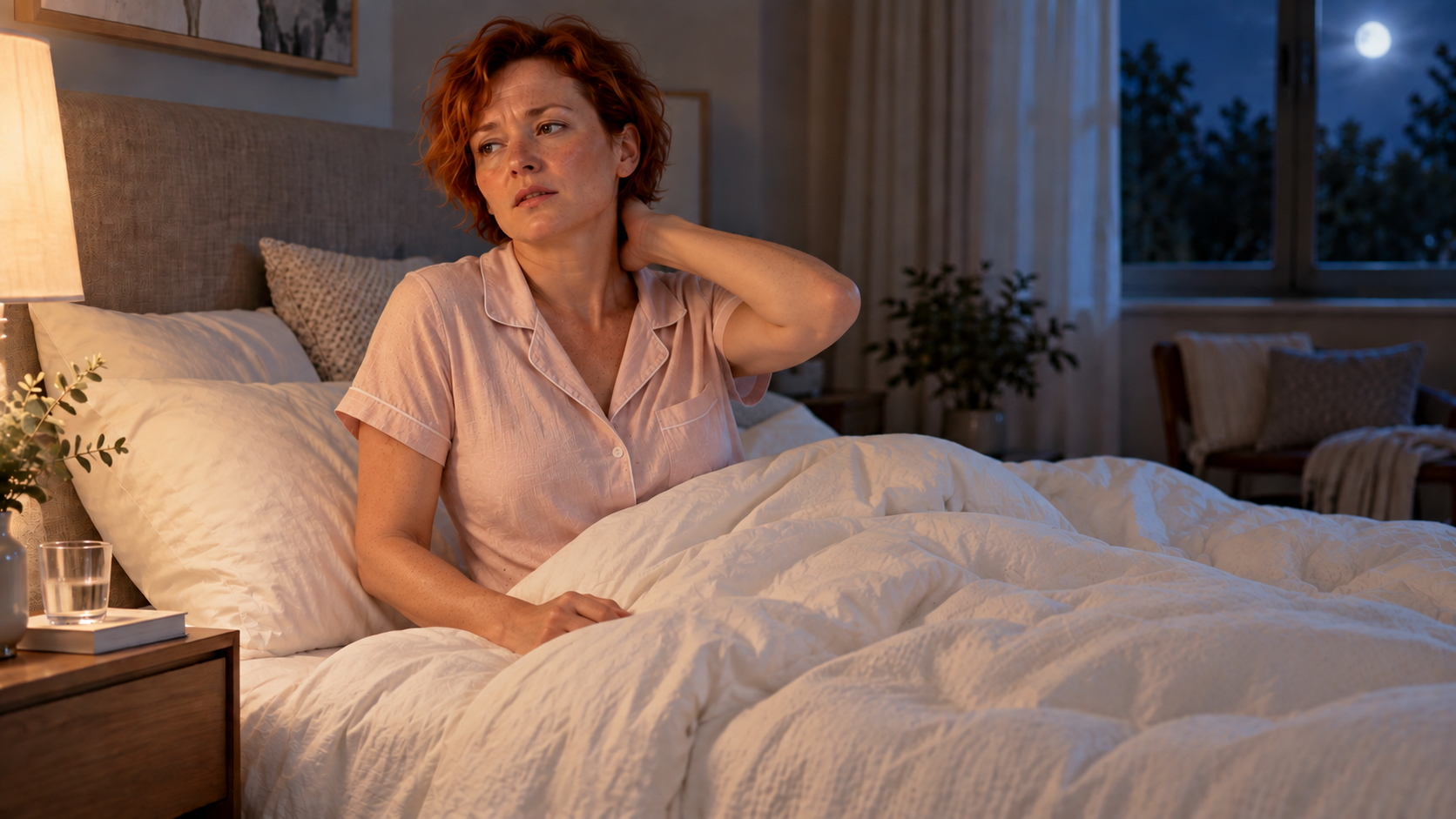
You go to bed feeling perfectly comfortable, only to wake up a few hours later hot, kicking off the covers or searching for the cool side of the pillow.
If this happens to you regularly, there can be many possible reasons. Sometimes the explanation is surprisingly simple: your bedroom is too warm, your bedding is holding onto heat, or your mattress doesn't breathe very well. Other times, hormones, medications, stress, alcohol or a health condition may play a role.
The good news is that there are several simple changes that may help you sleep cooler and more comfortably. It is also helpful to understand the difference between simply getting too hot while you sleep and experiencing true night sweats.
Why Do I Get So Hot When I Sleep?
Your body temperature naturally changes throughout the day and night. As bedtime approaches, your core body temperature normally begins to drop as part of the process that helps prepare your body for sleep.
Your surroundings can make that cooling process easier or harder.
A warm bedroom, thick comforter, heat-trapping mattress or heavy pajamas can create a little pocket of warmth around your body. You may fall asleep comfortably but wake up several hours later feeling much hotter.
There are also factors happening inside the body that can affect temperature regulation, including hormonal changes and certain medications.
Here are some of the more common possibilities.
1. Your Bedroom May Be Too Warm
This is one of the easiest things to check.
There isn't one perfect bedroom temperature that works for everyone, but sleep experts generally recommend keeping the bedroom fairly cool. Sleep Foundation suggests approximately 65 to 68°F for many adults, while Cleveland Clinic gives a broader range of around 60 to 67°F.
Rather than worrying about finding one exact number, experiment.
If you're regularly waking up hot, try lowering your thermostat a couple of degrees for several nights and see whether you notice a difference.
Also pay attention to airflow. A bedroom that feels comfortable when you first go to bed may become warm and stuffy several hours later.
2. Your Bedding May Be Trapping Heat
Sometimes the problem isn't the temperature of the bedroom at all.
It is the little environment you've created underneath your covers.
A heavy comforter, multiple blankets, thick mattress topper and warm pajamas can trap body heat. Some mattresses and bedding materials can also retain more heat than others.
Try simplifying your bedding for a few nights.
Use lighter layers that you can easily remove instead of one very heavy comforter. Breathable sheets and lightweight sleepwear may also make it easier for heat to escape.
And don't assume that you need the same bedding all year. The comforter that feels wonderful in January may be far too warm in June.
3. Perimenopause and Menopause Can Make You Feel Hot at Night
For women in their 40s and beyond, hormones deserve special mention.
Changes in estrogen during perimenopause and menopause can affect the body's temperature regulation and contribute to hot flashes and night sweats. Sleep problems are also common during this stage of life.
And perimenopause doesn't suddenly begin on your 50th birthday. Hormonal changes can begin years before menopause.
If you have started waking up unusually hot and you're also noticing changes in your menstrual cycle, daytime hot flashes or other new symptoms, it may be worth discussing them with your healthcare provider rather than assuming your bedroom is simply too warm.
4. Alcohol, Caffeine and What You Do Before Bed Can Matter
What you do during the hours before bedtime can sometimes affect how comfortable you feel during the night.
Alcohol, for example, can contribute to sweating and can also interfere with sleep quality. Spicy foods may make some people feel warmer, and caffeine late in the day can make restful sleep more difficult.
You don't necessarily need to eliminate everything at once.
Instead, pay attention to patterns.
If you wake up particularly hot after having wine with dinner, eating a very spicy late meal or drinking coffee in the evening, try changing that one habit for a week and see what happens.
5. Stress and Anxiety Can Sometimes Play a Role
Our bodies don't completely shut off from the day's stress just because we've climbed into bed.
Stress and anxiety can activate physical responses in the body, including sweating. They can also make sleep lighter and more fragmented, which may make you more aware of discomfort during the night.
A calmer bedtime routine won't solve every sleep problem, but it can be worth trying.
Dim the lights, put work away, give yourself time to wind down and keep the bedroom associated with rest rather than another hour of emails and scrolling.
6. Certain Medications Can Cause Nighttime Sweating
Some medications can contribute to excessive sweating or night sweats.
Several medication categories can be associated with night sweats, including some antidepressants, hormone therapies and medications used to treat diabetes.
If your nighttime overheating started after beginning a new medication or changing a dose, talk with your doctor or pharmacist.
Don't stop a prescribed medication on your own simply because you suspect it may be contributing.
7. Sometimes There May Be an Underlying Health Reason
Most of us occasionally wake up hot. That by itself doesn't necessarily mean something is wrong.
But recurring night sweats can sometimes be associated with medical conditions, including infections, thyroid problems, sleep disorders and other conditions.
This is why it is useful to distinguish between "My bed gets too hot" and "I'm repeatedly waking up drenched in sweat."
They aren't necessarily the same thing.
Feeling Hot at Night vs. Night Sweats
The term night sweats gets used very casually online, but medically it usually describes something more significant than feeling warm under your comforter.
Night sweats generally refer to repeated episodes of very heavy sweating during sleep that can soak your nightclothes or bedding.
If you wake up warm, throw off your blanket and immediately feel better, your sleeping environment may simply be too hot.
If you're regularly waking with soaked pajamas or sheets even though your bedroom is comfortably cool, that's different and deserves more attention.
Simple Ways to Sleep Cooler
Before completely redesigning your bedroom, start with the easiest changes.
Lower the bedroom temperature. Try reducing the thermostat slightly and see whether your sleep improves.
Use lighter bedding. Several lightweight layers give you more control than one very heavy comforter.
Choose breathable sleepwear. Lightweight pajamas can make a surprising difference if you're used to sleeping in heavier fabrics.
Improve airflow. A ceiling fan, portable fan or better room ventilation can help keep warm air from collecting around the bed.
Pay attention to your mattress and mattress topper. If your room feels cool but you become hot exactly where your body touches the bed, your sleep surface may be retaining heat.
Keep your evening meals and drinks in mind. Notice whether alcohol, spicy foods or caffeine seem to correspond with particularly uncomfortable nights.
Give yourself time to cool down. A very hot bath, intense late workout or overheated bedroom immediately before sleep may leave you feeling warmer when you're trying to settle down.
Most importantly, change one or two things at a time. Otherwise, you won't know what actually helped.
Your Bed Temperature Matters Too
We often focus entirely on the thermostat, but room temperature and bed temperature aren't exactly the same thing.
You can have a relatively cool bedroom and still feel hot underneath the covers.
Your body is surrounded by a mattress, sheets, pajamas, blankets and possibly another person. All of these can affect the temperature immediately around you.
That's why someone who constantly sleeps hot may want to look at the entire sleep environment rather than simply turning the air conditioning lower and lower.
Start with bedding and airflow. If those changes aren't enough, there are also mattresses, mattress toppers, fans and active bed-cooling or temperature-control systems designed specifically for people who struggle with sleeping hot.
The right solution depends on how significant the problem is and what's actually causing it.
When Should You Talk to Your Doctor About Night Sweats?
Occasionally waking up hot because your bedroom feels like a sauna is one thing.
Repeatedly waking up drenched in sweat is another.
Consider talking with your healthcare provider if night sweats are happening regularly, disrupting your sleep, beginning without an obvious explanation, or occurring along with other symptoms that concern you.
And if you're in your 40s or 50s and suspect hormonal changes may be involved, that's worth mentioning too. You don't simply have to accept years of miserable sleep without asking what might be happening.
A Cooler Night May Start With Something Simple
If you keep waking up hot at night, don't immediately assume you need an expensive solution.
Start with the basics.
Lower the thermostat a little. Try lighter bedding. Look at what you're wearing to bed. Improve airflow. Pay attention to whether certain evening habits make things worse.
Sometimes a few small changes are enough.
And if you've adjusted your sleeping environment but you're still regularly waking up extremely hot or experiencing significant night sweats, that's a good reason to look beyond the bedroom and talk with your healthcare provider.
Good sleep isn't just about getting enough hours. Being comfortable enough to stay asleep matters too.
You Might Also Like

Wellness
Why Am I So Tired in My 40s? Common Reasons Women Have Less Energy
Feeling more tired in your 40s? I’m sharing what I’ve noticed about my own energy, sleep and perimenopause, plus some common reasons women may feel more tired.
Read More
Fitness
How to Stay Fit After 40: Simple Ways to Stay Strong and Active
Staying fit after 40 doesn't have to mean living at the gym. Here are simple ways to stay strong, active and mobile while doing more of the things you enjoy.
Read More
Fitness
Strength Training for Women Over 40: How to Start and Get Stronger
New to strength training after 40? Here's how to start simply, choose the right resistance and gradually build strength for everyday life.
Read More