
Wellness
How to Sleep Better After 40: 9 Simple Habits for Better Sleep
Sleep changing in your 40s? Learn why sleep can become more difficult with age and discover 9 simple habits that may help you sleep better.
By Lena Sokolov
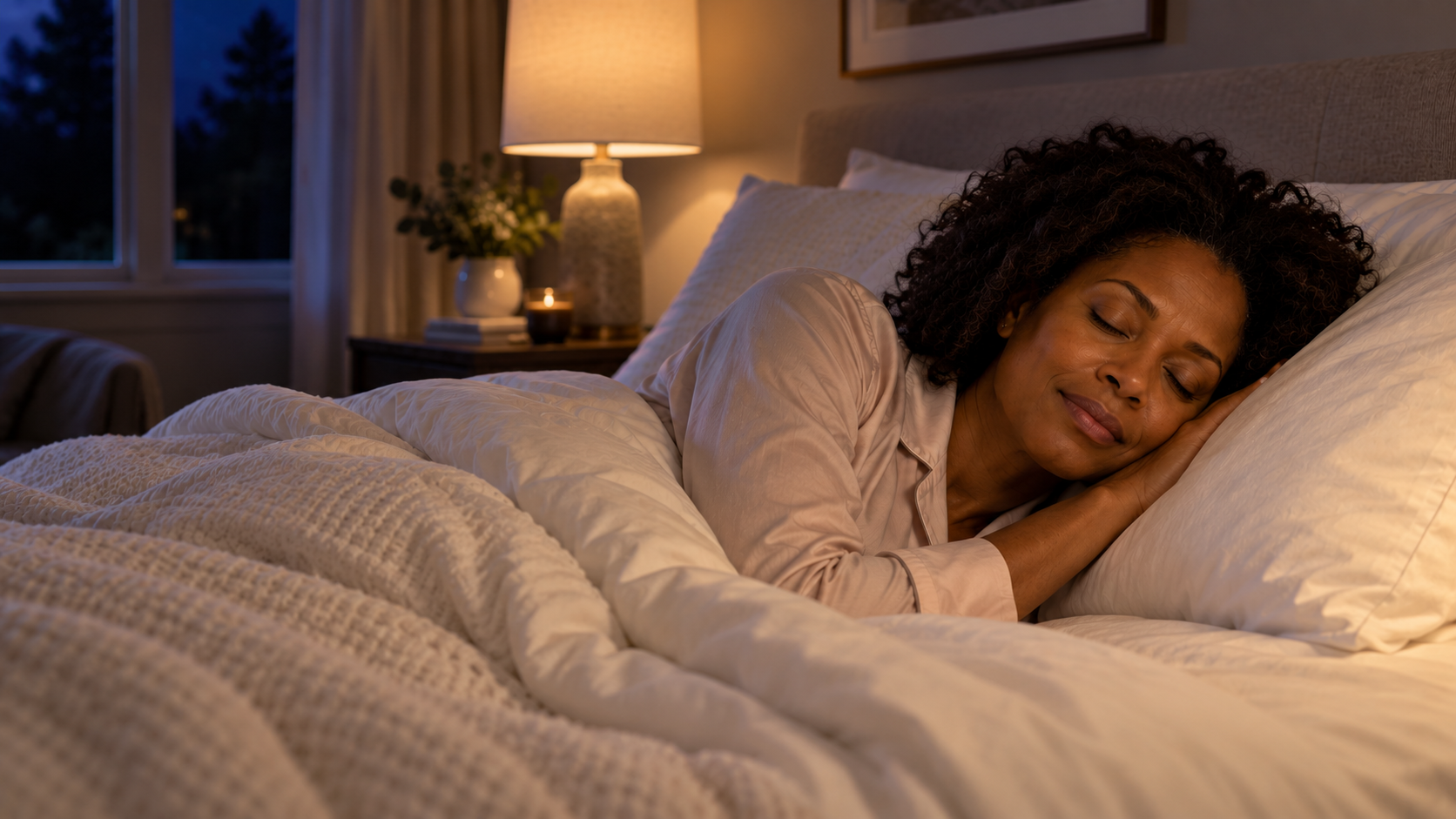
Maybe you used to fall asleep easily and stay asleep until morning. Now you wake up at 2 or 3 a.m., get too hot under the covers, or find that one little noise is enough to wake you.
If sleep seems different in your 40s, you're not necessarily imagining it.
Sleep changes as we get older, and for women, the hormonal changes that can begin during perimenopause may add another layer. Hot flashes, night sweats, stress, changing schedules and everyday habits can all affect how well you sleep.
But getting older doesn't mean poor sleep is something you simply have to accept.
There are plenty of simple things you can do to create better conditions for good sleep, and most don't require completely changing your life.
Why Does Sleep Change After 40?
Sleep doesn't suddenly change on your 40th birthday. Changes happen gradually throughout adulthood.
Research on sleep and aging shows that sleep can become lighter and more fragmented as we get older. Adults may spend less time in deep sleep and wake more frequently during the night.
For women, the 40s can also overlap with perimenopause.
Changes in hormones during the menopausal transition can contribute to hot flashes and night sweats, and sleep problems are common during this period.
That doesn't mean every sleep problem in your 40s is caused by hormones. Your schedule, stress level, caffeine, alcohol, exercise, bedroom environment, medications and health can all matter too.
So instead of assuming, "I'm getting older, so I just don't sleep anymore," it makes more sense to look at the things you can actually change.
1. Keep Your Sleep Schedule Consistent
It is tempting to stay up late on weekends and sleep until noon to make up for a busy week.
Your body generally prefers more consistency.
Try going to bed and waking up at roughly the same times each day. You don't have to live by the clock every single night, but large swings between weekdays and weekends can make maintaining a regular sleep rhythm more difficult.
If you want to change your schedule, make small adjustments rather than suddenly trying to go to bed two hours earlier.
And pay particular attention to your morning wake-up time. A consistent morning routine can help reinforce your body's daily rhythm.
2. Get Some Morning Light
One of the simplest things you can do for your sleep happens hours before bedtime.
Get outside in the morning.
Light is one of the strongest signals regulating your circadian rhythm, the internal clock that helps determine when you feel awake and when you become sleepy.
Open the curtains when you get up. Have your coffee near a bright window. Better yet, take a short walk outside when you can.
This doesn't need to become another complicated wellness routine.
Sometimes it really can be as simple as stepping outside and letting your body know that the day has started.
3. Move Your Body During the Day
Exercise isn't only about weight, muscle or how your clothes fit.
It can also support better sleep.
Regular physical activity is associated with better sleep quality, and it gives us another reason to keep moving as we get older.
That doesn't mean you need an exhausting workout every day.
Walking, strength training, cycling, tennis, swimming or whatever type of movement you genuinely enjoy can count. The best exercise routine is one you can actually continue doing.
If a very intense workout close to bedtime seems to leave you feeling energized rather than sleepy, try moving it earlier and see whether that helps.
4. Pay Attention to When You Drink Caffeine
I love practical changes more than extreme rules, and caffeine is a perfect example.
You don't necessarily need to give up your morning coffee just because you're over 40.
But caffeine can stay in your system for hours.
If you're having trouble falling asleep or waking frequently during the night, look at when you're drinking coffee, tea, energy drinks or other caffeinated beverages.
Try moving your last caffeinated drink earlier in the day for a week or two and see whether you notice a difference.
You may discover that your morning coffee isn't the problem at all, but that afternoon cup is.
5. Don't Use Alcohol as a Sleep Aid
A glass of wine can make you feel relaxed and sleepy, which is why alcohol can seem like it helps with sleep.
But feeling sleepy and getting good quality sleep aren't necessarily the same thing.
Alcohol can disrupt sleep later in the night and may contribute to nighttime awakenings and sweating.
If you're regularly waking up in the middle of the night, pay attention to whether it happens more often on evenings when you drink alcohol.
Again, look for patterns rather than assuming.
6. Give Your Brain a Chance to Wind Down
You finish everything you needed to do for the day, climb into bed and expect your brain to immediately switch off.
Sometimes it doesn't cooperate.
Instead of making bedtime the abrupt end of a busy day, create a little transition.
That could mean taking a shower, reading, doing your skincare routine, stretching, listening to something relaxing or simply dimming the lights and putting your phone away.
It doesn't need to be an elaborate hour long "perfect evening routine."
Even 20 or 30 quieter minutes can create a boundary between your day and your sleep.
And if scrolling on your phone consistently turns "I'm going to bed" into another hour awake, that's probably a habit worth changing.
7. Make Your Bedroom Cool, Dark and Comfortable
Your bedroom environment matters more than we sometimes realize.
Keep the room dark and quiet enough for comfortable sleep. If outside noise is a problem, consider whether a fan, white noise or another simple solution helps.
Temperature matters too.
A cooler bedroom generally supports sleep better than an overly warm one. But don't get obsessed with finding one supposedly perfect thermostat setting. Your bedding, pajamas, mattress and personal temperature preferences matter as well.
You can have a cool bedroom and still overheat underneath a heavy comforter.
If you're regularly waking up hot, I wrote a separate guide about why you may wake up hot at night and simple ways to sleep cooler. It's worth looking at the entire sleep environment rather than only the thermostat.
8. Be Careful With Heavy Meals Right Before Bed
Life doesn't always allow us to eat dinner at the perfect time.
But if you're regularly eating a large meal shortly before climbing into bed and then struggling to sleep comfortably, experiment with eating a little earlier.
Also pay attention to foods that seem to affect you personally.
Some people notice that spicy foods, alcohol or large late meals leave them feeling warmer or less comfortable during the night.
You don't need an enormous list of forbidden evening foods.
The goal is to notice how your body responds.
9. Stop Trying So Hard to Force Sleep
This one can be surprisingly difficult.
You wake up at 3 a.m., look at the clock and immediately start calculating:
"If I fall asleep right now, I can still get four more hours."
Then 20 minutes pass.
"Now I only have three hours and forty minutes."
Before long, you're stressed about being awake, which makes falling asleep even harder.
If you can't sleep, constantly checking the time usually doesn't help.
Keep the bedroom quiet and dim and avoid turning a nighttime awakening into the beginning of your day. If you're lying awake for a prolonged period, getting out of bed briefly and doing something calm in low light can sometimes be more helpful than becoming increasingly frustrated in bed.
Why Am I Waking Up at 3 A.M. in My 40s?
There isn't one universal reason.
Sleep naturally moves through different stages throughout the night, and brief awakenings aren't unusual. As sleep becomes lighter and somewhat more fragmented with age, you may also become more aware of waking during the night.
But other factors can contribute.
You may be too warm. You may need to use the bathroom. Alcohol may be disrupting the second half of your sleep. Stress may make it difficult to fall back asleep. A partner may move or snore.
And for women going through perimenopause, hot flashes and night sweats can be another reason for nighttime awakenings.
Instead of focusing on the exact time showing on the clock, pay attention to what happens around those awakenings.
Are you hot?
Do you wake after drinking alcohol?
Is your mind immediately racing?
Are you waking to use the bathroom?
Do you wake at approximately the same time regardless of when you go to bed?
Those patterns can give you more useful information than the number 3:00 itself.
Do Women Need Less Sleep After 40?
One misconception about aging is that we simply stop needing very much sleep.
Turning 40 doesn't suddenly reduce your need for rest.
For most adults, recommendations remain around seven to nine hours of sleep per night, although individual sleep needs vary.
What's different is that getting those hours may sometimes become more difficult.
You might spend eight hours in bed but wake repeatedly throughout the night. Or you may wake earlier than you used to.
That's why sleep quality matters along with the number of hours.
What About Perimenopause?
If you're a woman in your 40s and your sleep suddenly seems very different, perimenopause is worth knowing about.
Perimenopause can begin years before your final menstrual period. Hormonal changes during this transition can be associated with hot flashes, night sweats and sleep disruption.
But don't automatically blame every sleep problem on hormones.
If you're drinking coffee at 5 p.m., scrolling until midnight, sleeping in a hot bedroom and worrying about work at 3 a.m., those factors still matter.
And if you're experiencing significant hot flashes, night sweats, menstrual changes or persistent sleep problems, talk with your healthcare provider. You don't have to diagnose the cause yourself.
When Better Sleep Habits Aren't Enough
Good sleep habits are useful, but they don't solve every sleep problem.
If you're consistently having trouble falling asleep, waking repeatedly, waking much earlier than you want, experiencing significant night sweats, snoring heavily, gasping during sleep or feeling unusually tired during the day despite allowing enough time for sleep, it's worth discussing with a healthcare professional.
Persistent insomnia and sleep disorders such as sleep apnea deserve more than another pillow or a new bedtime routine.
The goal isn't to become perfect at sleeping.
It's to recognize when a few lifestyle changes may help and when the problem deserves a closer look.
Better Sleep After 40 Doesn't Have to Be Complicated
If your sleep isn't as easy as it used to be, don't try to change everything tonight.
Start with one or two things.
Go outside in the morning.
Move your afternoon coffee earlier.
Keep your bedtime and wake-up time a little more consistent.
Make your bedroom cooler.
Put your phone down before you get into bed.
Then give those changes enough time to see whether they actually make a difference.
Our bodies change as we get older, and our routines sometimes need to change with them. But sleeping poorly doesn't have to become an automatic part of turning 40.
You Might Also Like

Wellness
Why Do I Wake Up Hot at Night? Causes and Simple Ways to Sleep Cooler
Waking up hot at night? Learn common reasons you may get hot while sleeping, the difference between overheating and night sweats, and simple ways to sleep cooler.
Read More
Wellness
Why Am I So Tired in My 40s? Common Reasons Women Have Less Energy
Feeling more tired in your 40s? I’m sharing what I’ve noticed about my own energy, sleep and perimenopause, plus some common reasons women may feel more tired.
Read More
Fitness
How to Stay Fit After 40: Simple Ways to Stay Strong and Active
Staying fit after 40 doesn't have to mean living at the gym. Here are simple ways to stay strong, active and mobile while doing more of the things you enjoy.
Read More