
Wellness
What Is the Best Temperature for Sleep? How to Find Your Perfect Setting
What is the best temperature for sleep? Learn the recommended bedroom temperature, why your bed can still feel hot, and simple ways to sleep cooler.
By Lena Sokolov
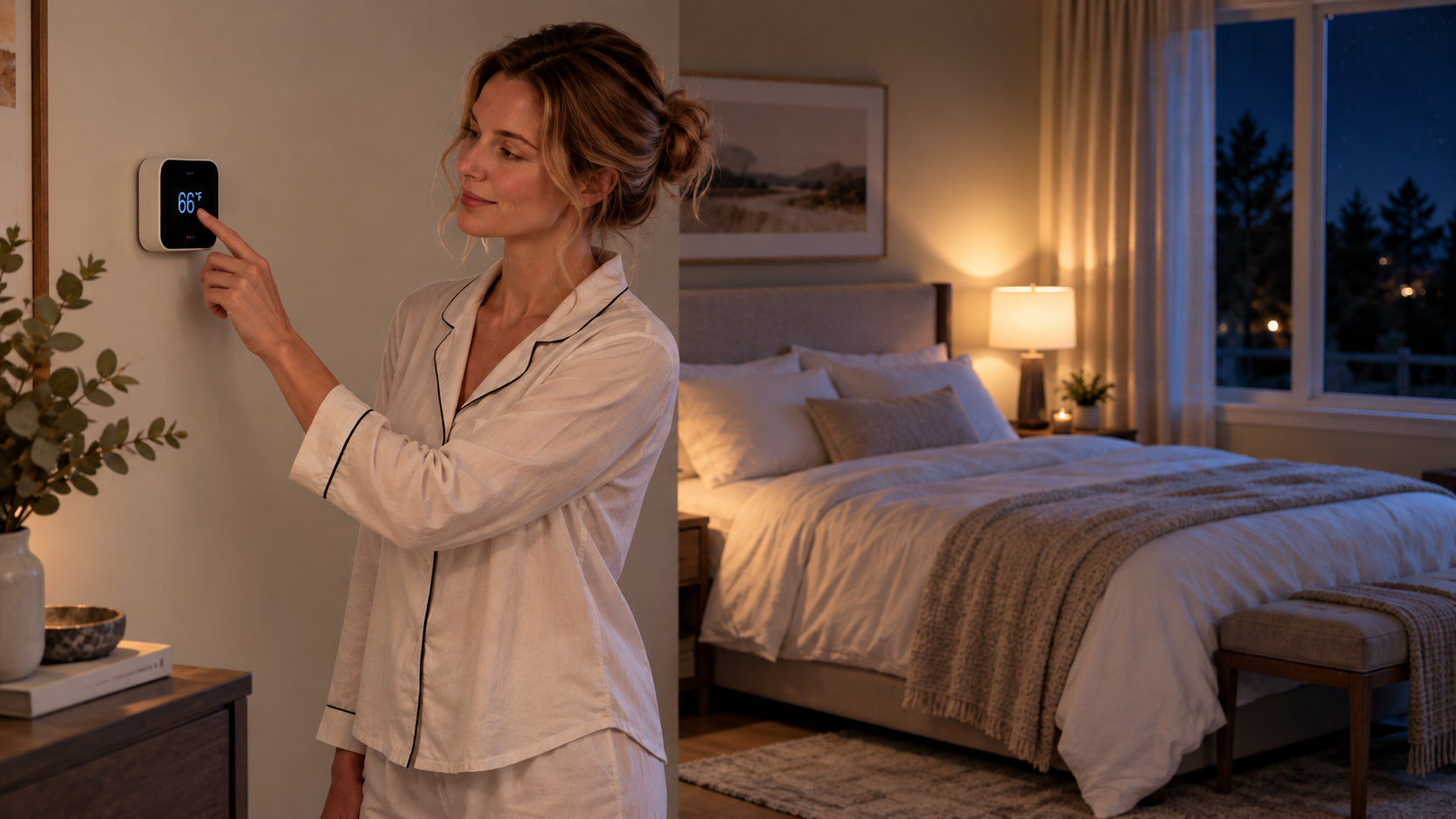
Have you ever climbed into bed feeling comfortable, only to wake up a few hours later too hot under the covers?
Or maybe you're the opposite. Your partner wants the bedroom freezing cold while you're reaching for another blanket.
Temperature can make a surprisingly big difference in how comfortable you feel while sleeping. But despite all the advice online, there isn't one magical thermostat setting that works perfectly for everyone.
For many adults, somewhere around 60 to 68°F is a reasonable range to experiment with, although recommendations vary and your personal comfort matters. Cleveland Clinic suggests approximately 60 to 67°F for adults, while Sleep Foundation discusses a range around 65 to 68°F.
The more useful question isn't necessarily, What number should my thermostat say?
It's:
What temperature helps me stay comfortably asleep throughout the night?
And finding that answer may involve more than adjusting your thermostat.
Why Does Temperature Matter for Sleep?
Your body temperature isn't exactly the same throughout the entire day.
As evening approaches, your body begins making physiological changes that help prepare you for sleep. Your core temperature naturally decreases as part of this process.
Your sleeping environment can either support that process or make staying comfortable more difficult.
If your bedroom is very warm, your body may have a harder time releasing heat. You might fall asleep without a problem but wake later feeling hot and uncomfortable.
That's one reason a cooler bedroom is commonly recommended for sleep.
But cooler doesn't mean as cold as possible.
If you're shivering, curling yourself into a ball or piling on several blankets because the bedroom feels freezing, you've probably gone too far in the other direction.
The goal is comfortable cooling, not creating an indoor winter.
Is 65°F Really the Perfect Sleeping Temperature?
You've probably seen 65°F mentioned as the ideal temperature for sleeping.
It's a useful starting point.
It isn't a rule.
Sleep Foundation currently recommends approximately 65 to 68°F for many adults, while Cleveland Clinic suggests a somewhat broader range of about 60 to 67°F.
The fact that reputable sources don't give exactly the same number tells us something important:
There isn't one perfect temperature for every person.
Someone who naturally sleeps hot may love a 64°F bedroom.
Someone else may be miserable at that temperature.
Your bedding, pajamas, mattress, humidity, age, hormones and whether you share the bed can all influence how warm or cool you feel.
Instead of treating 65°F as a magic number, use it as a place to begin experimenting.
Why Do I Sleep Better in a Cold Room?
A comfortably cool bedroom works with your body's natural nighttime temperature changes.
That's different from saying a cold room is always better.
Your body needs to release heat as it prepares for and maintains sleep. A cooler environment can make that easier, while excessive heat can interfere with comfortable sleep.
But making your bedroom colder and colder isn't necessarily going to make you sleep better and better.
Comfort still matters.
If you're cold enough that you're waking up or adding layers throughout the night, the temperature isn't working for you.
Think cool and comfortable, not cold.
Your Bedroom Temperature and Your Bed Temperature Aren't the Same Thing
This is something I think gets overlooked when we talk about sleeping temperature.
You can set your thermostat to 66°F and still wake up hot.
Why?
Because you're not sleeping directly in the room. You're sleeping inside a little environment created by your bed.
Think about everything surrounding your body:
Your mattress.
Your mattress topper.
Your sheets.
Your pajamas.
Your comforter.
Extra blankets.
And possibly another warm human being sleeping next to you.
Research into thermal comfort during sleep recognizes that bedding, sleepwear and body coverage all influence how we experience temperature while sleeping.
So if your bedroom already feels cool but you're constantly throwing off the covers at 2 a.m., turning the thermostat down another five degrees may not be the first thing you need to change.
Look at the bed itself.
Could Your Mattress Be Making You Hot?
Possibly.
Different mattresses and mattress toppers can retain different amounts of body heat depending on their construction and materials.
If you notice that the room feels perfectly comfortable but the area directly underneath your body becomes increasingly warm during the night, your sleep surface may be contributing.
Before replacing an expensive mattress, though, start with easier things.
Try lighter bedding.
Remove a thick mattress protector or topper temporarily if appropriate and see whether you notice a difference.
Change your sheets.
Adjust your pajamas.
You want to identify the actual problem before spending money trying to solve it.
How to Keep Your Bed Cooler at Night
If your bedroom is already cool but your bed feels hot, try working through the layers around your body.
Use lighter bedding
One very heavy comforter can trap a lot of warmth.
Several lighter layers give you more control. If you become warm during the night, you can remove one layer without going from completely covered to completely uncovered.
Choose breathable sleepwear
Heavy pajamas combined with warm bedding can create more insulation than you realize.
Experiment with lighter sleepwear and see whether you remain more comfortable.
Look at your sheets
Your sheets are directly against your body for hours.
Different fabrics and weaves can feel very different when it comes to warmth, breathability and moisture.
You don't necessarily need expensive "cooling" sheets. Start by paying attention to whether your current sheets feel breathable and comfortable.
Don't forget the mattress topper
A thick topper can completely change how a mattress feels, including how much warmth seems to collect around your body.
If your sleeping hot problem began after adding a topper or mattress pad, that's a useful clue.
Improve airflow around the bed
A ceiling fan or portable fan may help move air through the room and around your sleeping area.
If your bedroom becomes stuffy overnight, improving airflow may make a noticeable difference even without dramatically lowering the thermostat.
What If Your Partner Sleeps Hot and You Sleep Cold?
This might be the hardest temperature problem of all.
One person wants the thermostat at 64°F.
The other looks like they're preparing for an expedition to Antarctica.
Instead of fighting over the thermostat every night, try creating different microclimates on each side of the bed.
Use separate blankets.
One person can use a lighter comforter while the other uses something warmer.
Change pajamas independently rather than assuming you both need the same sleepwear.
Position a fan so it primarily affects the person who sleeps hotter.
This is another reason the thermostat alone doesn't tell the whole story.
Two people can share exactly the same bedroom temperature while experiencing completely different temperatures underneath their respective covers.
Does the Best Sleep Temperature Change After 40?
There isn't a special thermostat setting everyone should start using when they turn 40.
But your experience of temperature can change.
For women, perimenopause and menopause can bring hot flashes and night sweats that disrupt sleep. A bedroom temperature that felt completely comfortable several years ago may suddenly feel too warm.
Your bedding preferences may need to change too.
If you're waking up hot regularly, don't assume you simply have to live with it because you're getting older.
Start by looking at the room and your bed.
And if you're experiencing significant night sweats rather than simply feeling warm, that's something worth discussing with your healthcare provider.
I've written more about this in "Why Do I Wake Up Hot at Night? Causes and Simple Ways to Sleep Cooler."
How to Keep Your Bedroom Cooler for Sleep
If the room itself is the problem, start with simple changes.
Lower the thermostat gradually. If you normally sleep at 72°F, you don't need to jump immediately to 62°F. Try lowering it a degree or two and see how you feel.
Use a fan. Moving air can make the bedroom feel more comfortable and prevent it from becoming stuffy.
Keep daytime heat out. If direct sunlight heats your bedroom during the afternoon, curtains or shades can help reduce heat buildup before bedtime.
Improve ventilation when conditions allow. Fresh airflow can help when the outdoor temperature and humidity are comfortable.
Consider humidity. Temperature isn't the only thing affecting comfort. A humid bedroom can feel warmer than the thermostat suggests.
Adjust your bedding seasonally. Your winter sleep setup probably shouldn't be identical to your summer one.
These are simple changes, but sometimes simple is all you need.
What About Cooling Mattresses, Toppers and Bed Cooling Systems?
There is now an entire category of sleep products designed for people who sleep hot.
You'll find mattresses marketed for airflow, cooling mattress toppers, cooling pillows, specialized sheets, fans and active bed temperature systems.
Some may be useful for certain sleepers.
But I wouldn't start by assuming you need to buy something.
First figure out where the heat is coming from.
If your bedroom is 75°F, start with the room.
If you're wearing heavy pajamas under a thick comforter, start there.
If your bedroom is already comfortably cool and you've experimented with lighter bedding but you're still consistently overheating inside the bed, then it may make sense to look at solutions designed specifically to manage the temperature around your sleeping environment.
The important part is solving the right problem.
How to Find Your Ideal Sleeping Temperature
Instead of copying someone else's thermostat setting, run a little experiment.
Start around the commonly recommended cooler range that feels reasonable for you.
Then change one thing at a time.
Try lowering the temperature by one or two degrees for several nights.
Notice whether you fall asleep comfortably.
More importantly, notice what happens later.
Do you wake up hot?
Do you wake up cold?
Are you kicking off the comforter?
Are you pulling another blanket over yourself?
Do you sleep comfortably until morning?
Then adjust again.
Your goal isn't to achieve the scientifically impressive thermostat number you read online.
Your goal is to create an environment where you can fall asleep comfortably and stay comfortable throughout the night.
Temperature Is Only One Part of Better Sleep
A perfectly cool bedroom can't compensate for every sleep problem.
Your sleep schedule, caffeine, alcohol, exercise, stress, light exposure and bedtime habits can all matter too.
If sleep in general has become more difficult as you've gotten older, you may also want to read "How to Sleep Better After 40: 9 Simple Habits for Better Sleep."
And remember that persistent sleep problems deserve attention.
If you're regularly experiencing severe night sweats, insomnia, loud snoring, gasping during sleep or significant daytime sleepiness, don't assume adjusting the thermostat will solve everything. Talk with your healthcare provider.
Start With Comfort, Not a Number
So, what is the best temperature for sleep?
For many adults, somewhere in the general range of 60 to 68°F can be a useful place to experiment, with individual recommendations varying within that range.
But don't become obsessed with finding the perfect number.
Your thermostat is only one piece of your sleep environment.
Your mattress, sheets, comforter, pajamas, airflow, humidity and sleeping partner can all affect how warm you actually feel in bed.
Start with a comfortably cool bedroom. Adjust one thing at a time. Pay attention to what your body is telling you.
Because ultimately, the best sleeping temperature isn't the number someone else says is perfect.
It's the temperature that helps you stay comfortably asleep.
You Might Also Like
Wellness
How to Sleep Better After 40: 9 Simple Habits for Better Sleep
Sleep changing in your 40s? Learn why sleep can become more difficult with age and discover 9 simple habits that may help you sleep better.
Read More
Wellness
Why Do I Wake Up Hot at Night? Causes and Simple Ways to Sleep Cooler
Waking up hot at night? Learn common reasons you may get hot while sleeping, the difference between overheating and night sweats, and simple ways to sleep cooler.
Read More
Wellness
Why Am I So Tired in My 40s? Common Reasons Women Have Less Energy
Feeling more tired in your 40s? I’m sharing what I’ve noticed about my own energy, sleep and perimenopause, plus some common reasons women may feel more tired.
Read More