
Beauty & Skincare
Skincare Routine for Beginners: Where to Start When You Don’t Know What You Need
Skincare can feel overwhelming when you’re just starting. Here’s how to build a simple routine around the basics your skin actually needs.
By Lena Sokolov
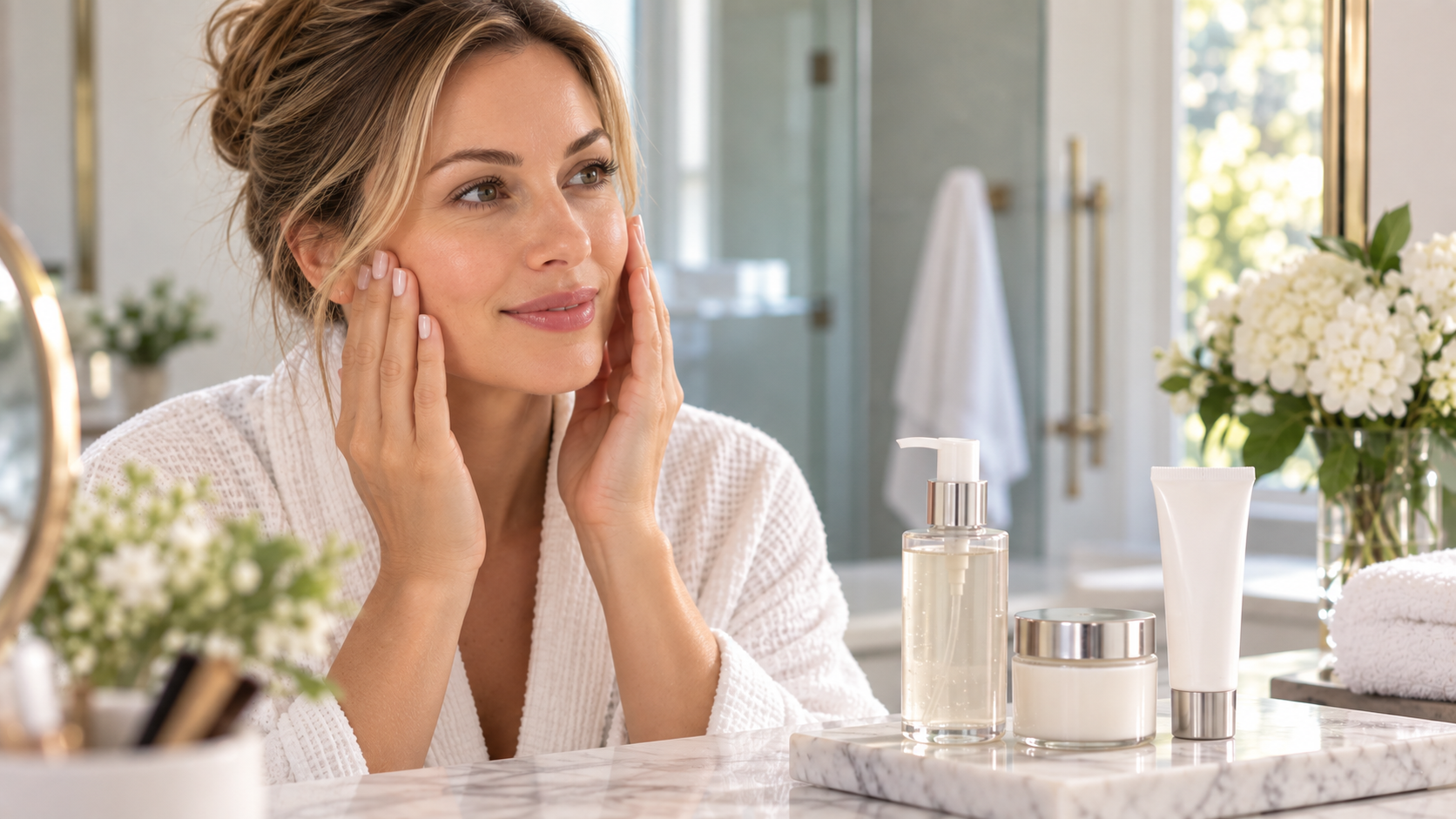
If you're new to skincare, walking through the skincare aisle or looking at products online can be overwhelming.
Cleanser. Toner. Serum. Retinol. Hyaluronic acid. Eye cream. Exfoliator. Face masks. Day cream. Night cream.
Where do you even start?
And do you really need all of it?
I understand why women get confused. Skincare has become so complicated that sometimes it feels like you need a chemistry degree just to wash your face.
But you don't.
A good skincare routine doesn't need to start with 10 or 15 products. You can learn the basic steps first, understand what each one does, and gradually build a routine that works for your skin.
That's exactly what I want to help you do.
You Don't Need to Buy Everything at Once
One of the biggest mistakes I think beginners make is buying too much too quickly.
You see someone else's skincare routine and suddenly you have a cleanser, toner, three serums, an exfoliating acid, retinol, eye cream, two moisturizers and a mask.
Then your skin becomes irritated and you don't even know which product caused it.
Instead, learn the purpose of each step.
In my own skincare guide, I break a good routine into five essential areas:
Cleanse. Tone. Treat. Moisturize. Protect.
That doesn't mean you need to introduce every treatment and product on your first day.
Think of these five steps as the framework you're building toward.
Let's go through them one at a time.
Step 1: Cleanse Your Skin
Cleansing is where I believe a good skincare routine begins.
Throughout the day, our skin is exposed to makeup, oil, sweat, dirt, sunscreen and pollution. Cleansing removes those things and prepares your skin for the products you're going to apply afterward.
But stronger isn't necessarily better.
You want a gentle cleanser that cleans your skin without leaving it feeling stripped, tight or uncomfortable.
In my Essential Skincare Guide, I recommend looking for hydrating and soothing ingredients such as glycerin, amino acids, aloe vera, hyaluronic acid or chamomile.
Your skin should feel clean afterward, not punished.
If You Wear Makeup, Consider Double Cleansing
This is especially important at night.
If I'm wearing makeup, I don't want to simply wash my face quickly and assume everything is gone.
In my guide, I recommend starting with micellar water makeup remover to break down and remove makeup. Then follow with your regular cleanser to wash away what remains.
It's a simple version of double cleansing and helps make sure you're actually starting your nighttime skincare with clean skin.
Step 2: Tone
Toner is a step I include in my skincare routine.
I use it after cleansing and before applying my serum and moisturizer.
A toner can provide an additional layer of hydration and help remove anything that may have been left behind after cleansing. Depending on the formula, it may also contain ingredients intended for particular skin concerns.
The important thing is choosing a toner that works with your skin rather than assuming every toner is the same.
I prefer hydrating or balancing formulas rather than something that leaves the skin feeling dry or stripped.
In my Essential Skincare Guide, toner is one of the five essential steps in the routine and comes directly after cleansing.
Step 3: Treat What Your Skin Actually Needs
This is where skincare can become confusing because there are so many choices.
Serums and treatments are generally where you begin addressing specific concerns.
Maybe you're concerned about:
Fine lines.
Dryness.
Uneven skin tone.
Pigmentation.
Dullness.
Loss of firmness.
Texture.
You don't necessarily need a separate bottle for every concern.
This is why I like the idea of choosing products based on what your skin actually needs.
Some ingredients you may encounter include vitamin C, hyaluronic acid, peptides and retinol. I discuss all four in more detail in my Essential Skincare Guide because they serve different purposes.
For example, hyaluronic acid is commonly used for hydration. Vitamin C is often used for brightness and uneven pigmentation. Peptides are included in many products designed for aging skin, while retinol is one of the better studied ingredients for concerns such as fine lines and skin texture.
But you don't need to start all of them at once.
If you're a beginner, choose your treatments slowly.
What About Retinol?
Retinol gets talked about so much that women sometimes feel like they're doing skincare wrong if they aren't using it.
You aren't.
Retinol can be a useful ingredient, particularly for concerns such as fine lines, texture and pigmentation. But it can also cause dryness and irritation when you first introduce it.
If you decide to use retinol, start slowly rather than immediately using it every night.
And remember that not every ingredient or treatment is appropriate for every person. Retinoids, for example, aren't recommended during pregnancy.
Skincare doesn't have to become a competition over who can tolerate the strongest products.
Step 4: Moisturize
Moisturizer is one of those products I wouldn't skip.
Its job is to help hydrate the skin, reduce water loss and support the skin barrier.
And yes, oily skin needs moisturizer too.
The difference is in the type you choose.
If your skin is normal to dry, you may prefer a richer moisturizer with ingredients such as ceramides, hyaluronic acid, shea butter or oils.
If you have oily or combination skin, you may be happier with a lighter gel or water based moisturizer.
If you have sensitive skin, look for a simple formula that avoids ingredients you know irritate your skin. In my guide, I suggest looking for soothing ingredients such as aloe vera, oatmeal and ceramides.
Your moisturizer should work with your skin, not against it.
Step 5: Protect Your Skin
If there's one habit I want women to take seriously, it's sun protection.
UV exposure contributes to premature skin aging, including wrinkles and dark spots, and it also increases the risk of skin cancer.
Use a broad spectrum sunscreen with SPF 30 or higher and make it part of your daytime routine.
And don't think about sunscreen only when you're going to the beach.
Your skin is exposed to UV radiation during normal everyday life too.
This is one of those skincare habits that isn't particularly exciting. It doesn't come in a tiny glamorous bottle promising a transformation by next Tuesday.
But it's important.
So What Should a Beginner Morning Skincare Routine Look Like?
Once you understand the five basic areas, your routine becomes much easier to organize.
A simple starting morning routine can look like this:
Cleanser → Toner → Serum or Treatment → Moisturizer → Sunscreen
If you're brand new to skincare and aren't ready for a serum yet, that's okay. Start with the other steps and add treatments as you learn more about your skin.
My complete morning routine in the Essential Skincare Guide goes further. It includes cleansing, dry brushing, a facial mask when appropriate, toner, serum, eye care, moisturizer with SPF and then makeup if I'm wearing it.
But I don't expect a woman who has never had a skincare routine to wake up tomorrow and suddenly do every one of those things.
Build your routine.
You can get there gradually.
And What About a Nighttime Skincare Routine?
At night, the focus changes because you no longer need sun protection and you want to remove everything that has accumulated on your skin during the day.
A good starting nighttime routine can look like:
Remove makeup → Cleanse → Tone → Serum or Treatment → Moisturize
If you don't wear makeup, you can obviously skip the makeup removal step.
As your routine develops, you may decide to add things such as an eye cream, dry brushing, exfoliation or a facial mask.
In my complete nighttime routine, I use makeup remover first when needed, followed by cleanser, dry brushing or a facial mask, toner, serum, eye cream and night cream.
Again, you don't have to do everything on your first night.
What About Exfoliation?
Exfoliation is another part of skincare that I think can be very beneficial, but this is an area where more is definitely not always better.
Exfoliation removes dead skin cells from the surface of the skin, which can help with dullness and texture.
There are different ways to exfoliate.
In my guide, I talk about physical methods such as facial dry brushing and scrubs, as well as chemical exfoliation and professional treatments such as chemical peels and microdermabrasion.
These methods are not interchangeable, and they don't all need to be done with the same frequency.
The important thing is to avoid over exfoliating.
Your skin doesn't need to feel raw or irritated for an exfoliation treatment to be working.
Do You Need Facial Masks?
I personally enjoy facial masks and include them in my skincare routine.
But there isn't just one type of mask.
Some are designed primarily for hydration. Others focus on cleansing, brightness, oiliness or exfoliation.
That's why I don't think you should buy a mask simply because someone online says it's amazing.
Ask yourself:
What am I trying to do for my skin?
If your skin feels dry, you probably don't need the same mask as someone whose main concern is excess oil.
I go into the different types of masks in my Essential Skincare Guide, but as a beginner, the most important thing to understand is that a mask is an additional treatment, not a substitute for your everyday skincare routine.
What About Eye Cream?
The skin around our eyes is delicate, and this area can have its own concerns, including puffiness, dark circles, dryness and fine lines.
I personally include separate eye care in my more complete skincare routine.
If you're just starting, however, don't let the number of products overwhelm you.
Learn your basic routine first.
Then, if your eye area is something you specifically want to address, you can look for a product designed for that concern.
This is another area where choosing a product because you actually need it makes much more sense than buying it because someone told you every woman over 30 needs one.
Know Your Skin Type
Before buying a bathroom full of skincare, spend some time paying attention to your skin.
Does it frequently feel tight and dry?
Does it become oily quickly?
Are some areas oily while others are dry?
Does your skin react easily to new products?
Most skincare is designed around several broad skin types:
Dry
Oily
Combination
Normal
Sensitive
Understanding your skin type makes choosing products much easier.
A rich cream that feels wonderful on very dry skin may feel far too heavy on oily skin.
A strong active ingredient that one woman loves may irritate someone with sensitive skin.
Skincare is personal.
What If You're Starting Skincare in Your 30s or 40s?
Start.
You're not late.
I especially want to say this because my own Essential Skincare Guide was created for women in their 30s and beyond.
Maybe you didn't think much about skincare in your 20s.
Maybe you've washed your face with whatever happened to be in the bathroom.
That's okay.
You don't need to panic and buy every bottle with the words "anti aging" written on it.
As we get older, women may notice changes such as dryness, fine lines, pigmentation, dullness or changes in firmness. But everyone's skin is different.
Start taking care of the skin you have now.
The Biggest Beginner Mistake: Starting Everything at Once
This is worth repeating.
Please don't introduce five new active products on Monday.
If your skin becomes red, itchy, dry or irritated by Thursday, how are you going to know which product caused it?
Introduce new products gradually.
Give yourself time to see how your skin responds.
And don't assume irritation means a product is "working."
Sometimes irritation just means your skin doesn't like what you're doing to it.
Does Good Skincare Have to Be Expensive?
No.
This is one of the skincare myths I address in my guide too.
An expensive product isn't automatically better because it comes in beautiful packaging.
Look at what the product is designed to do, whether the ingredients make sense for your needs and, most importantly, how your skin responds to it.
There are wonderful products at many price points.
Spend intentionally rather than assuming a higher price means better skin.
How Do You Know When It's Time to Add Something?
Ask yourself one question:
What do I want this product to do?
If you don't know the answer, you probably don't need it yet.
Once you've established your basic routine, you can start addressing specific concerns.
Maybe that's hydration.
Maybe it's pigmentation.
Maybe it's fine lines.
Maybe it's puffiness.
Maybe it's texture.
That's when serums, exfoliation, masks, eye treatments and other products begin to make more sense.
You're no longer buying random skincare.
You're building your skincare routine.
Start Simple, Then Build
If you're standing in your bathroom wondering where to begin, remember these five areas:
Cleanse.
Remove makeup, oil, dirt and the things your skin has been exposed to.
Tone.
Follow cleansing with a toner appropriate for your skin.
Treat.
Choose serums and treatments based on what your skin actually needs.
Moisturize.
Support hydration and your skin barrier with a moisturizer appropriate for your skin type.
Protect.
Use sunscreen during the day.
Then, as you become more comfortable with your routine, you can explore exfoliation, facial masks, eye care and other treatments.
You don't need perfect skincare.
You need a routine you understand and will actually follow.
Want Me to Walk You Through the Complete Routine?
If you're ready to go beyond the basics, I created my Essential Skincare Guide for women in their 30s and beyond.
Inside, I go much deeper into cleansing, toner, exfoliation, serums, facial masks, moisturizers, sunscreen, morning and nighttime routines, eye care, facial exercises and lifestyle habits that support healthy looking skin.
It's designed to help you understand why you're doing each step instead of simply giving you another list of products to buy.
And if you'd like to see some of the skincare products and tools I personally use or recommend, you can visit my Beauty Favorites.
This article shares my personal approach to skincare along with general educational information. It isn't medical advice. If you have persistent skin problems, a skin condition, severe irritation or questions about which treatments are appropriate for you, talk with a qualified healthcare professional or board certified dermatologist.
You Might Also Like
Beauty & Skincare
How to Make Your Hands Look Younger: My Simple Hand-Care Routine
Our hands can show signs of aging too. Here’s the simple routine I use to exfoliate, moisturize, protect, and care for my hands as I get older.
Read More
Beauty & Skincare
Skincare in Your 40s: What I’ve Changed in My Own Routine
My skincare routine hasn’t necessarily become more complicated in my 40s, but my focus has changed. Here’s what I’m doing differently for puffiness, firmness, moisture, and healthy-looking skin.
Read More